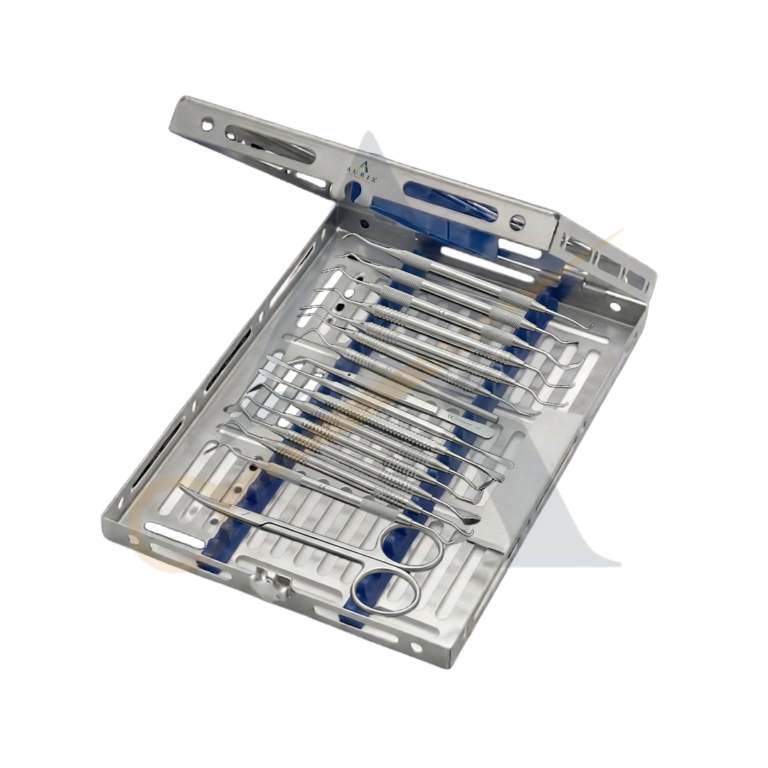
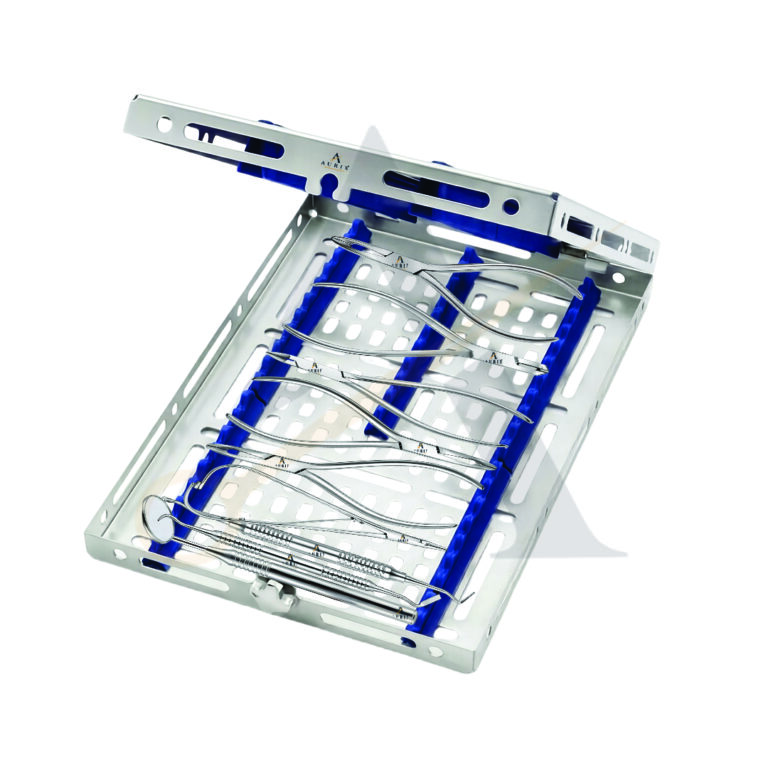
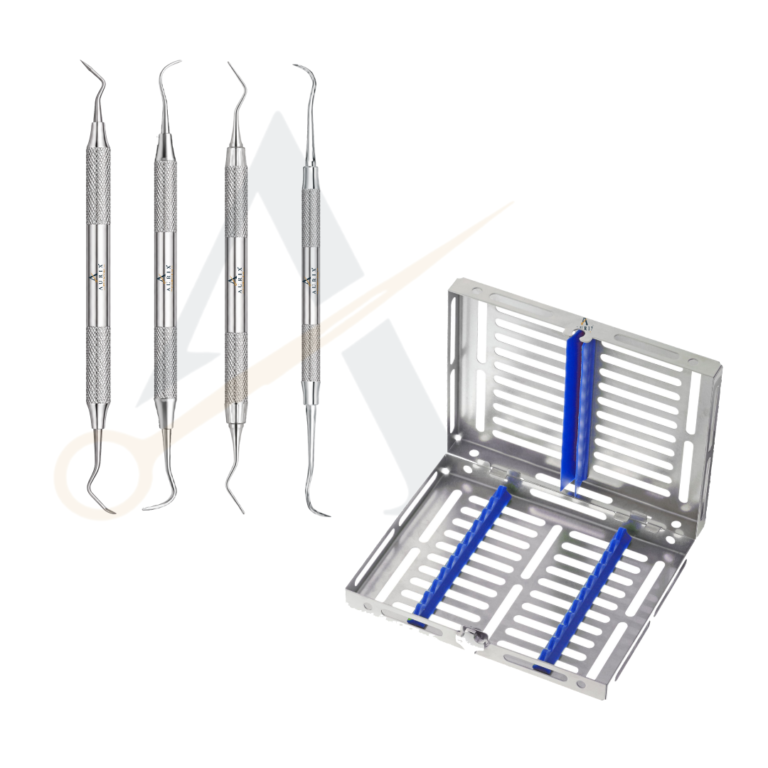
Gracey curettes are the go-to instruments for scaling and root planing below the gum line. Unlike universal curettes, each Gracey curette is designed for specific teeth and surfaces. This area-specific design lets the blade adapt closely to the root, which improves calculus removal and reduces tissue trauma. However, with numbers from 1/2 to 17/18, the full series can seem complex. This guide breaks down the Gracey numbering system, explains how each pair is used, and shares tips for choosing and maintaining them.
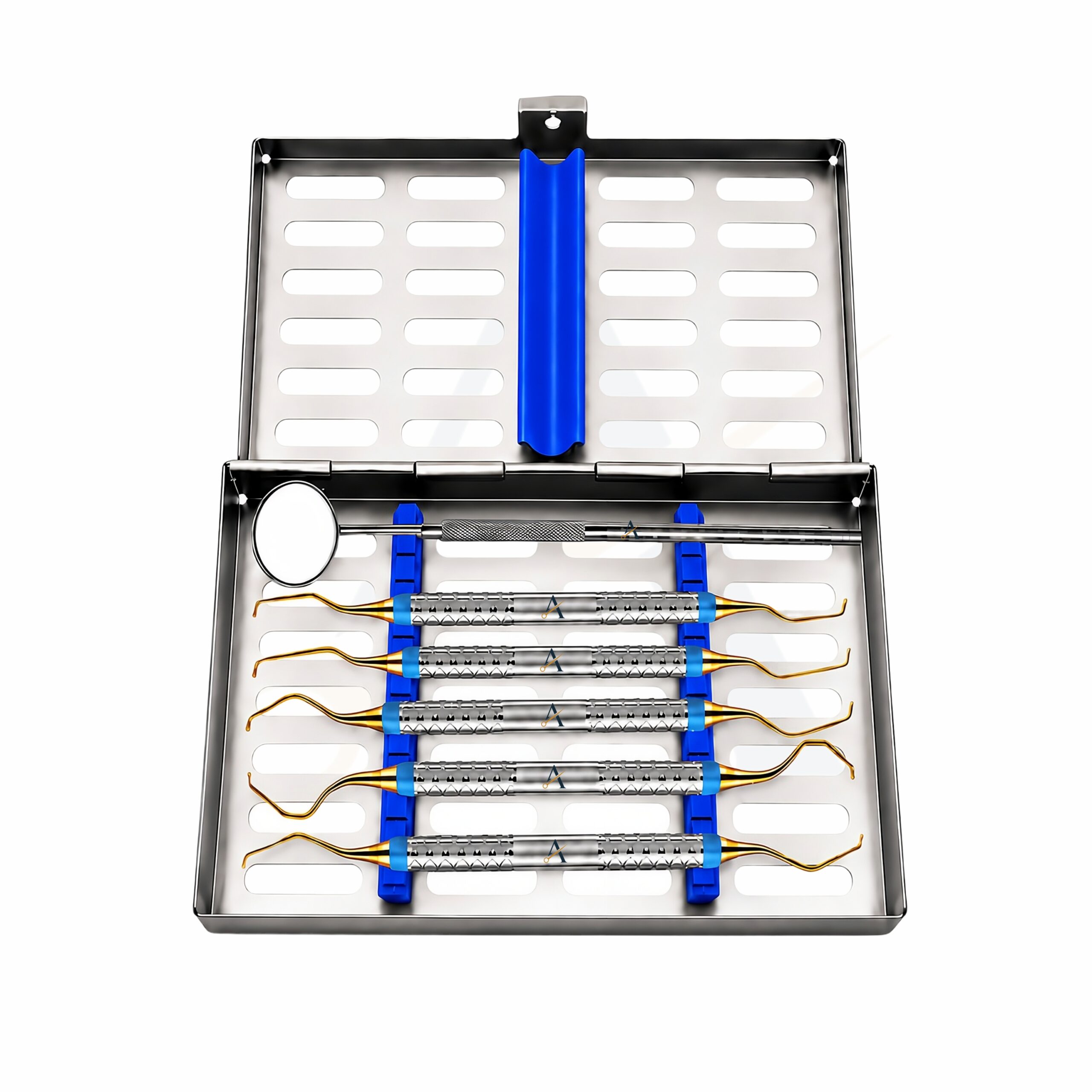
What Makes Gracey Curettes Different?
Gracey curettes have three special features:
- One cutting edge per end: Only the lower, longer edge of the blade is used for cutting.
- Offset blade: The face of the blade sits at about 60–70 degrees to the lower shank. As a result, when the lower shank is parallel to the tooth surface, the cutting edge is at the correct working angle.
- Area-specific shanks: Each pair has a shank shape designed to reach a particular region of the mouth.
Universal curettes, by contrast, have two cutting edges and a blade at 90 degrees to the shank.
The Gracey Numbering System
- Gracey 1/2 and 3/4: Anterior teeth, all surfaces.
- Gracey 5/6: Anterior teeth and premolars.
- Gracey 7/8 and 9/10: Posterior teeth, buccal and lingual surfaces.
- Gracey 11/12: Posterior teeth, mesial surfaces.
- Gracey 13/14: Posterior teeth, distal surfaces.
- Gracey 15/16: A modified 11/12 for mesial surfaces, with a sharper shank angle.
- Gracey 17/18: A modified 13/14 for distal surfaces, with better access in tight spaces.
Many clinicians use a “minimum set” of four: 5/6, 7/8, 11/12 and 13/14. In addition, these four cover most of the mouth.
Standard, After-Five and Mini Designs
Standard Graceys suit normal pocket depths. Extended-shank (after-five) versions have a lower shank about 3 mm longer, so they reach pockets deeper than 5 mm. Mini-bladed versions have blades half the length of a standard blade. Therefore, they fit narrow pockets, furcations and line angles more easily.
How to Use Gracey Curettes
- First, choose the right number for the tooth and surface.
- Next, use a modified pen grasp and a stable finger rest.
- Then, insert the blade gently below the gum with the face close to the root.
- After that, keep the lower shank parallel to the tooth surface to get the correct angle.
- Next, use short, controlled working strokes with firm lateral pressure to remove calculus.
- Finally, finish with lighter, longer strokes to smooth the root.
Tip: if the lower shank is not parallel to the surface, you may be using the wrong end.
Choosing Quality Gracey Curettes
- High-grade stainless steel: Holds an edge longer and resists corrosion.
- Accurate blade angle: Correct offset is essential for effective root planing.
- Balanced, lightweight handles: Reduce fatigue during long periodontal appointments.
- Textured grip: Wider, textured handles improve control and lower the risk of strain injuries.
- Clear numbering: Easy-to-read markings save time chairside.
Sharpening and Maintenance
A sharp curette removes calculus with fewer strokes, which is kinder to both patient and clinician. Therefore, sharpen Gracey curettes regularly with a sharpening stone, keeping the original blade angle. Remember that only the lower cutting edge needs sharpening. After sharpening, clean, dry and sterilize the instruments. Replace any curette whose blade has become too thin, because it may break during use.
Graceys in the Hygiene Setup
A complete periodontal tray usually combines dental scalers for supragingival deposits with Gracey curettes for subgingival work. It also includes a probe and explorer from our diagnostic instruments range for assessment and checking.
Want to learn more about the background? Read this overview of periodontal curettes on Wikipedia. When you are ready to buy, our team will help you choose the right gracey curettes for your clinic.
Gracey Curettes FAQs
Can Gracey curettes be used above the gum line?
They can, but scalers are usually more efficient for heavy supragingival deposits.
How often should I sharpen my curettes?
Many clinicians sharpen after every use or every few uses. Test sharpness on a plastic test stick.
Do you sell full Gracey sets?
Yes. Aurix International supplies the full series, minimum sets and custom combinations with private labelling.
Also, browse our full Gracey curettes in our catalogue collection to complete your periodontal kit.
Order Gracey Curettes from Aurix International
Aurix International manufactures dental and surgical instruments in Sialkot, Pakistan, and supplies clinics, hospitals and distributors worldwide. We offer wholesale pricing, private labelling, custom kits and flexible order quantities. Need a mixed tray? Try our Medical Kit Builder, or contact us today for a fast quote.