Dental implant surgery depends on more than the implant system and the drill motor. Throughout the procedure, the surgical team relies on a set of hand instruments to open the site, manage soft tissue, handle bone and graft material, and close the wound. When these hand tools are precise and well organized, the surgery runs smoothly. When they are missing or poorly made, delays and complications become more likely. This guide walks through the key dental implant hand instruments, step by step, and explains what to look for in each one.

Step 1: Incision and Flap Access
Most implant procedures begin with a crestal incision and a small flap. For this stage you need:
- Scalpel handle: A #3 handle with #15 or #15c blades is standard.
- Periosteal elevators: Molt #9, Prichard or Buser elevators lift the full-thickness flap cleanly from the bone.
- Tissue punch: For flapless cases, a circular punch removes a neat disc of gum tissue over the implant site.
A sharp, thin periosteal elevator is especially important. In addition, it lifts the periosteum in one layer, which protects blood supply and helps healing.
Step 2: Retraction and Visibility
Good vision is vital during osteotomy preparation. Therefore, the assistant holds the flap and cheek back with dental retractors such as the Minnesota, Seldin or Austin designs. Smooth, rounded edges protect the flap from tearing.
Step 3: Bone Preparation and Handling
While the drilling sequence is done with the implant motor, several hand tools support bone work:
- Bone spreaders and expanders: Gently widen narrow ridges.
- Osteotomes and condensers: Compact soft bone and, in some techniques, lift the sinus floor through the crest.
- Bone files and rongeurs: Smooth sharp edges and reshape the ridge.
- Bone curettes: Remove soft tissue and debris from the site. See our bone curette range.
- Depth gauges and parallel pins: Check depth and angulation during preparation.
Step 4: Grafting
Many implant cases need bone grafting, either at the time of placement or before it. Useful tools include:
- Bone graft carriers (syringes): Deliver particulate graft material directly to the site.
- Graft packers and pluggers: Compact the material gently into the defect.
- Bone mixing wells and spoons: Mix graft particles with blood or saline.
- Membrane placement instruments: Position collagen or other membranes over the graft.
For upper posterior cases with little bone height, a dedicated sinus lift kit provides curved elevators to raise the sinus membrane safely.
Step 5: Suturing and Closure
Finally, the flap is closed around the healing cap or over the cover screw. For this you will need a fine needle holder such as a Castroviejo or Mayo-Hegar, suture scissors and delicate tissue forceps like Adson or Gerald forceps. These tools are also part of our oral surgery instruments collection.
Why a Dedicated Kit of Dental Implant Instruments Makes Sense
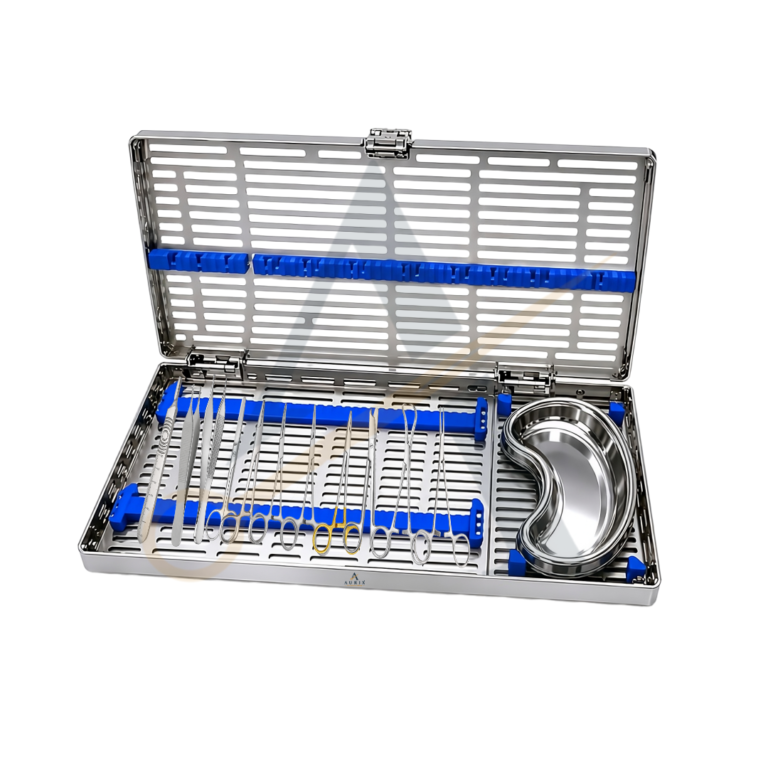
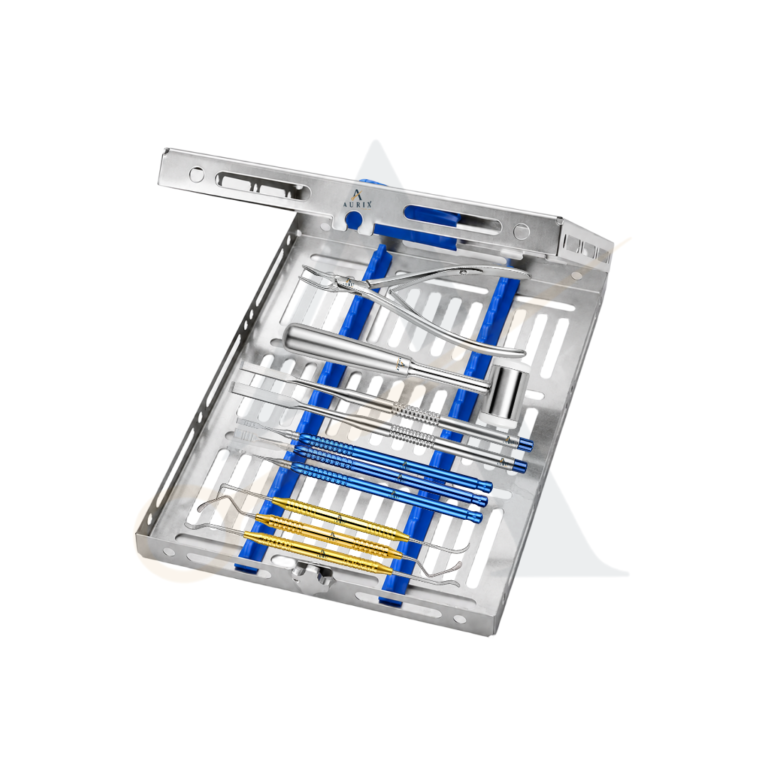
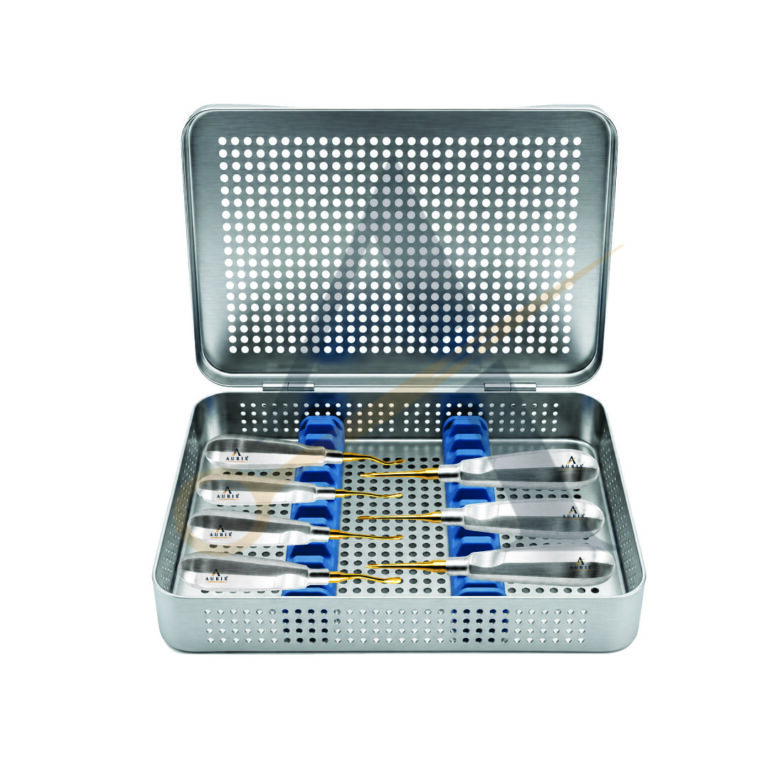
Keeping dental implant instruments in a dedicated cassette has several benefits. First, the team always knows every tool is present before surgery starts. Second, the instruments get the same careful handling and sterilization every time. Third, setup time drops because the tray is ready to go. Moreover, a separate kit prevents fine implant tools from being worn out on routine extractions.
What to Look For in Dental Implant Instruments
- Surgical-grade stainless steel with high corrosion resistance.
- Fine, precise tips for delicate soft tissue and membranes.
- Titanium-safe working ends on tools that touch implant surfaces, to avoid scratching.
- Balanced, lightweight handles for control in long procedures.
- Autoclavable cassette to protect and organize the set.
Care and Sterilization of Dental Implant Instruments
Clean implant instruments promptly after surgery, because dried blood and graft particles are hard to remove. Also, use an ultrasonic cleaner, rinse, dry and lubricate hinged tools. Then, pack them in their cassette and autoclave according to your protocol. Inspect tips for damage before every case.
Want to learn more about the background? Read this overview of dental implants on Wikipedia. When you are ready to buy, our team will help you choose the right dental implant instruments for your clinic.
Dental Implant Instruments FAQs
Do implant hand instruments work with all implant systems?
Most general hand instruments, such as elevators, retractors and graft tools, work with any system. Drivers and drills, however, are usually system-specific.
Can Aurix build a custom implant kit?
Yes. Send us your instrument list and we will build a kit, with private labelling if needed.
Are these instruments suitable for surgical training centres?
Yes. We supply training centres and universities with consistent, durable sets.
Moreover, explore our full dental implant instruments in our catalogue range to equip your surgical suite.
Order Dental Implant Instruments from Aurix International
Aurix International manufactures dental and surgical instruments in Sialkot, Pakistan, and supplies clinics, hospitals and distributors worldwide. We offer wholesale pricing, private labelling, custom kits and flexible order quantities. Need a mixed tray? Try our Medical Kit Builder, or contact us today for a fast quote.