Root elevators are some of the most important instruments in exodontia. Before a tooth can be removed with forceps, it usually needs to be loosened. Elevators do this job. They also retrieve broken roots and root tips that forceps cannot grip. However, elevators apply strong forces in small spaces. So, choosing the right type and using it correctly is essential for safe, atraumatic extractions. This guide explains the main types of root elevators, how they work and how to use them safely.

How Root Elevators Work
Elevators work using three basic mechanical principles:
- Wedge: The blade is pushed between the tooth and bone, which expands the socket and moves the tooth.
- Lever: The instrument pivots on a fulcrum, usually the bone, to lift the tooth or root.
- Wheel and axle: The instrument is rotated around its long axis, as with a Cryer elevator, to lift a root out of its socket.
In practice, these principles are often combined. Understanding them helps clinicians apply controlled force in the right direction.
Main Types of Root Elevators
Straight Elevators
Straight elevators, such as the Coupland, Warwick James and #34S/#301, are the most common. In addition, they have a concave blade on a straight shank. They are used to luxate teeth and loosen roots in most areas of the mouth.
Cryer Elevators (Cross-Bar or Triangular)
Cryer elevators have triangular, pointed blades and come in left and right pairs. They are used to remove a remaining root after the other root of a multi-rooted tooth has been extracted.
Apical (Root Tip) Elevators
Apical elevators, such as the Heidbrink and West, have fine, thin tips. Also, they are designed to tease small root tips out of the apex of the socket.
Luxators
Luxators look like elevators but have thinner, sharper blades. Moreover, they are designed to cut the periodontal ligament rather than lever the tooth. As a result, they help preserve surrounding bone, which is valuable before implant placement.
Angled and Offset Elevators
Angled elevators, such as the Miller or Potts, reach posterior teeth and lower molars more easily.
How to Use Root Elevators Safely
- Choose the right blade size. First, the blade should fit snugly into the space between tooth and bone.
- Hold the instrument correctly. Next, place the handle in the palm and extend the index finger along the shank. This gives control and acts as a stop.
- Protect the patient. Then, always support the jaw and keep your other fingers around the area, so the elevator cannot slip into soft tissue.
- Use bone as the fulcrum. Never use an adjacent tooth as a fulcrum unless it is also being extracted.
- Apply slow, steady force. Next, controlled rotation and gentle pressure are safer than sudden force.
- Switch to forceps when the tooth is mobile. Finally, finish the extraction with extracting forceps.
Common Mistakes to Avoid
- Using too much force, which can fracture the jaw or tooth.
- Levering against a neighbouring tooth.
- Working without finger protection, which risks slips into the tongue or palate.
- Pushing root tips towards the sinus in upper posterior teeth.
- Using a dull or bent elevator.
What Makes a Quality Root Elevator?
- Hardened stainless steel that resists bending and keeps a sharp edge.
- Thin, precise blades that fit tight spaces.
- Large, ergonomic handles for secure palm grip and controlled force.
- Consistent quality across left and right pairs.
Care and Sharpening
Elevator blades gradually dull with use. Therefore, check them regularly and sharpen with a flat stone, keeping the original bevel. In fact, clean them in an ultrasonic cleaner, dry fully and autoclave. Replace any elevator with a bent or chipped blade.
Building an Elevator Set
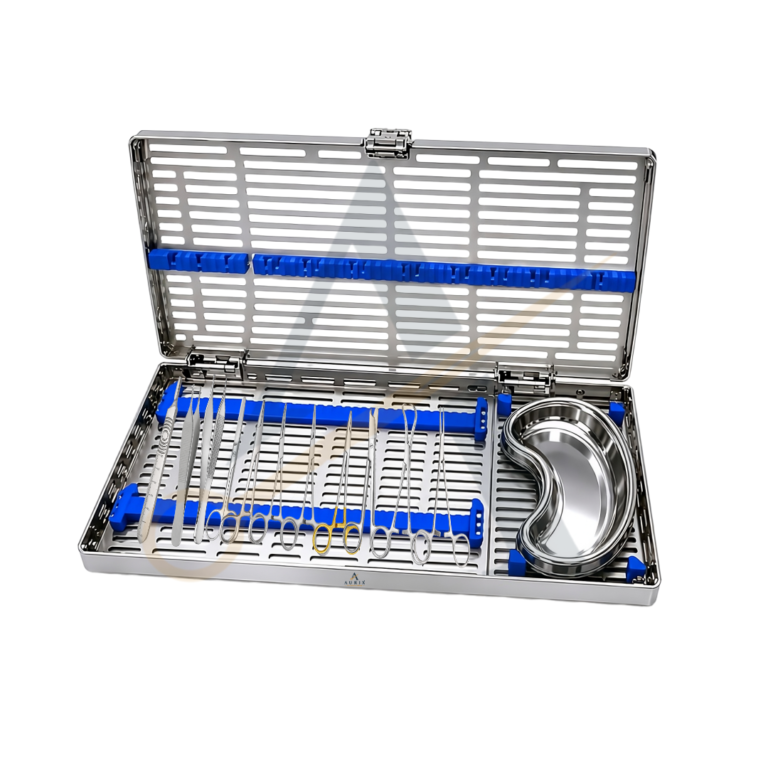
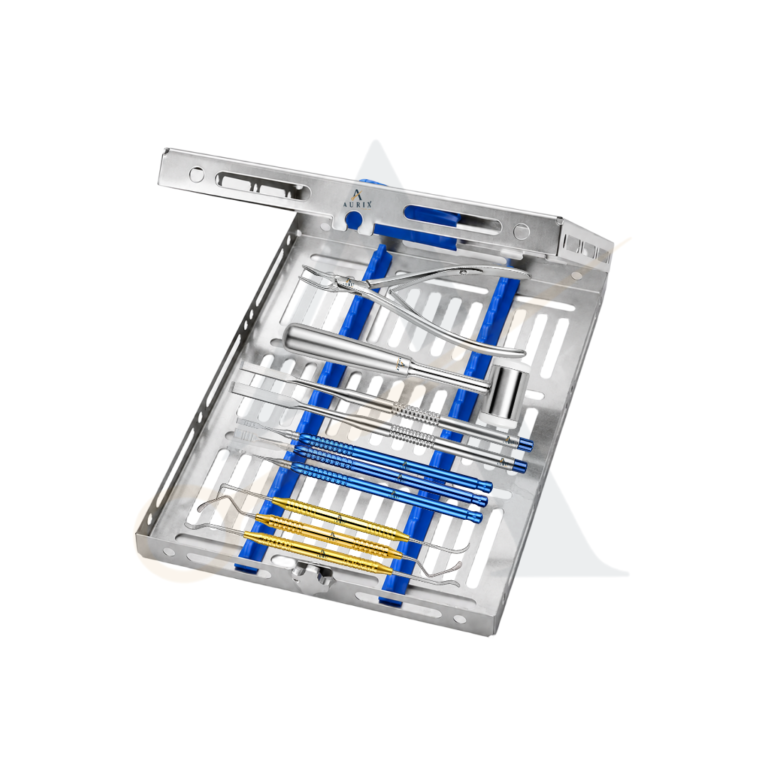
A practical general-practice set includes a small and a large straight elevator, a pair of Cryer elevators, and a pair of apical elevators. Many clinicians also add luxators for atraumatic extraction. After extraction, a bone curette cleans the socket.
Want to learn more about the background? Read this overview of tooth extraction on Wikipedia. When you are ready to buy, our team will help you choose the right root elevators for your clinic.
Root Elevators FAQs
What is the difference between a luxator and an elevator?
A luxator has a thinner, sharper blade that cuts the ligament. An elevator is stronger and designed for levering.
Which elevator is best for broken roots?
Cryer elevators are ideal for multi-rooted teeth, while apical elevators suit small root tips.
Can Aurix supply custom elevator sets?
Yes. We build custom sets with private labelling for clinics and distributors.
Furthermore, explore our full range of root elevators in our catalogue.
Order Root Elevators from Aurix International
Aurix International manufactures dental and surgical instruments in Sialkot, Pakistan, and supplies clinics, hospitals and distributors worldwide. We offer wholesale pricing, private labelling, custom kits and flexible order quantities. Need a mixed tray? Try our Medical Kit Builder, or contact us today for a fast quote.