Professional cleaning is one of the most common procedures in any dental clinic. At the heart of that cleaning are dental scalers. Although ultrasonic devices are popular, hand scalers remain essential. They give tactile control, work in areas where ultrasonic tips struggle, and need no power or water supply. In this guide, we compare the main types of hand scalers, explain when to use a scaler instead of a curette, and share tips on keeping them sharp.

What Is a Dental Scaler?
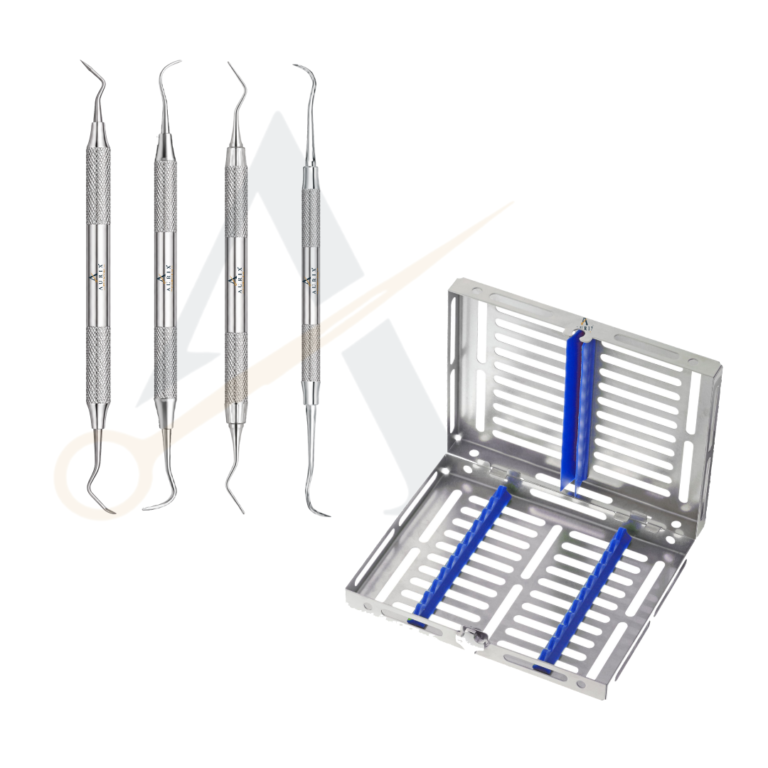
A dental scaler is a hand instrument used to remove calculus (tartar), plaque and stains from tooth surfaces. In addition, most scalers are designed for supragingival use, which means above the gum line. They usually have pointed tips and two cutting edges that meet at a sharp point.
Main Types of Dental Scalers
Sickle Scalers
The sickle scaler is the most common type. Its blade is triangular in cross-section, with two cutting edges that meet at a pointed tip. Straight sickles, like the H6/H7, work on front teeth, while contra-angled sickles, such as the 204S or Jacquette, reach premolars and molars. Sickle scalers are excellent for removing heavy calculus from contact areas.
Jacquette Scalers
Jacquette scalers are similar to sickles but have straighter blades. Also, they are useful for anterior and premolar interproximal areas.
Hoe Scalers
Hoe scalers have a blade turned at about 100 degrees to the shank. Moreover, they are used with a pulling stroke to remove large, heavy deposits. However, they are used less often today.
Chisel Scalers
Chisel scalers are pushed through contacts between front teeth to remove bridge-like calculus.
Files
Periodontal files have several small cutting edges. They crush large calculus deposits before finishing with a curette.
Scalers vs Curettes: What Is the Difference?
| Feature | Scaler | Curette |
|---|---|---|
| Tip | Pointed | Rounded (toe) |
| Cross-section | Triangular | Semi-circular |
| Main use | Above the gum line | Below the gum line |
| Tissue safety | Can injure soft tissue if used subgingivally | Safe in pockets |
In short, scalers clear heavy deposits above the gum, while curettes such as Gracey curettes clean root surfaces deep in pockets.
How to Use a Sickle Scaler
- First, use a modified pen grasp and a firm finger rest.
- Next, place the tip just under the edge of the calculus deposit.
- Then, angle the blade face at 70–80 degrees to the tooth surface.
- After that, use short, firm pull strokes towards the biting edge.
- Next, overlap strokes to cover the whole surface.
- Finally, check the surface with an explorer to confirm it is smooth.
Why Sharp Dental Scalers Matter
A sharp scaler removes calculus in fewer strokes. In fact, this reduces hand fatigue for the clinician and discomfort for the patient. On the other hand, a dull scaler slides over calculus and burnishes it, which leaves smooth deposits that are hard to detect. Therefore, sharpen scalers regularly using a sharpening stone. Maintain the original blade shape and angles, and test sharpness on a plastic test stick.
Choosing Quality Dental Scalers
- High-carbon or premium stainless steel for a durable edge.
- Correct blade geometry for efficient cutting.
- Lightweight, wide handles that reduce the risk of repetitive strain injury.
- Textured grip for control with wet gloves.
- Double-ended designs to cover more areas with fewer instruments.
Building a Hygiene Tray with Dental Scalers
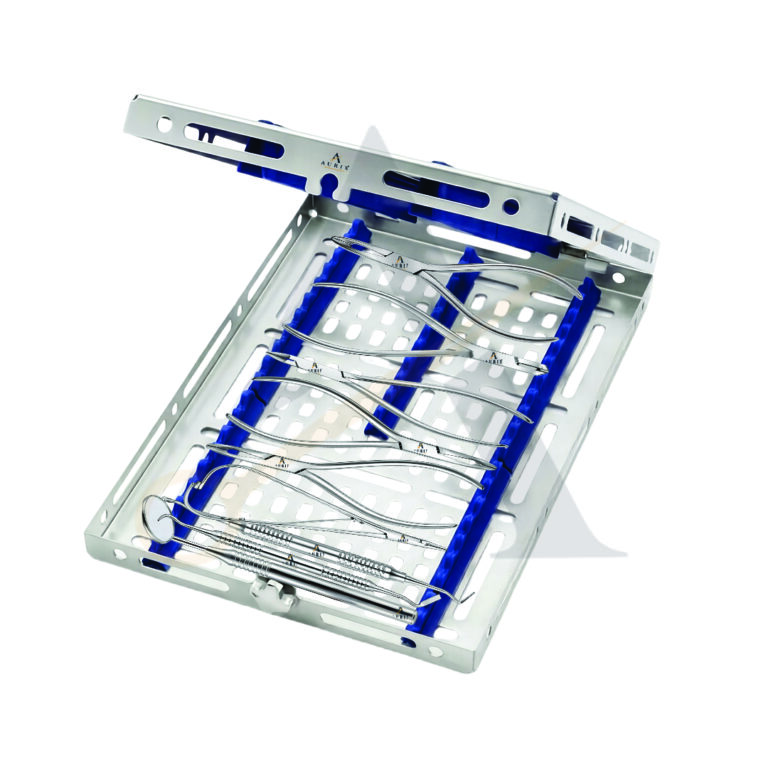
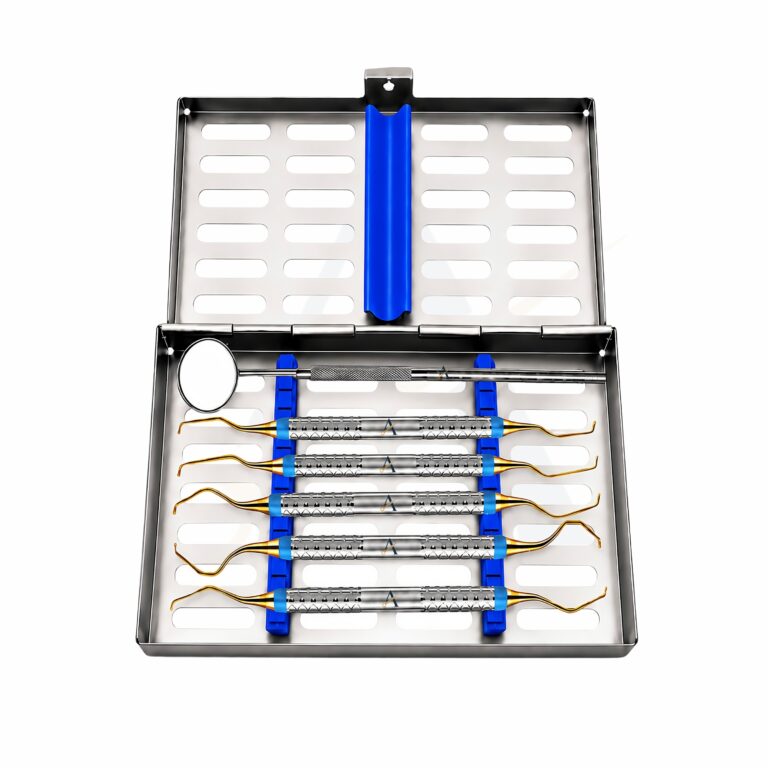
A typical hygiene tray contains a mouth mirror, probe and explorer from our diagnostic instruments, one anterior and one posterior sickle scaler, and a set of Gracey curettes. Furthermore, this combination handles almost every routine cleaning.
Want to learn more about the background? Read this overview of periodontal scalers on Wikipedia. When you are ready to buy, our team will help you choose the right dental scalers for your clinic.
Dental Scalers FAQs
Are hand scalers still needed with ultrasonic scalers?
Yes. Hand scalers give better tactile feedback and are ideal for fine finishing and patients who cannot tolerate ultrasonic tools.
How often should scalers be sharpened?
Ideally after every use or every few uses, depending on how much calculus they remove.
Does Aurix supply scalers in bulk?
Yes. We supply single patterns, hygiene sets and private-label orders.
In addition, explore our complete range of dental scalers in our catalogue.
Order Dental Scalers from Aurix International
Aurix International manufactures dental and surgical instruments in Sialkot, Pakistan, and supplies clinics, hospitals and distributors worldwide. We offer wholesale pricing, private labelling, custom kits and flexible order quantities. Need a mixed tray? Try our Medical Kit Builder, or contact us today for a fast quote.