Extracting forceps are among the most recognizable instruments in dentistry. Yet many clinicians, especially new graduates, find the wide range of patterns confusing. There are forceps for upper and lower teeth, for incisors, premolars and molars, and for roots and wisdom teeth. Choosing the right pair for each tooth makes extractions safer, faster and less traumatic. In this guide, we explain how extracting forceps are designed, the most common patterns, and how to build a practical forceps set for your clinic.

Parts of Extracting Forceps
Every pair of dental forceps has three main parts:
- Beaks: The working ends that grip the tooth. Their shape matches the crown and root form of a specific tooth.
- Joint (hinge): Connects the beaks and handles. A smooth box joint gives stable, even closing.
- Handles: Provide leverage and grip. They are often serrated for a secure hold.
In addition, the angle between beaks and handles tells you whether a forceps is for the upper or lower jaw.
Upper vs Lower Extracting Forceps
Upper (maxillary) forceps usually have beaks in line with the handles, or with a slight S-shaped or bayonet curve for posterior teeth. Lower (mandibular) forceps have beaks at roughly a right angle to the handles, so they can reach down onto the lower teeth.
Common Forceps Patterns
Numbering varies between English and American patterns, but the ideas are the same. Here are the most widely used types:
- Upper anteriors (e.g. English #1, American #150 family): Straight beaks for incisors and canines.
- Upper premolars (e.g. #147, #150): Slight curve for good access and rounded beaks for single or twin roots.
- Upper molars, left and right (e.g. #17, #18L/#18R, #89/#90): One beak has a point that fits the buccal furcation, while the other is rounded for the palatal root.
- Lower anteriors and premolars (e.g. #151, #74): Narrow, rounded beaks set at an angle.
- Lower molars (e.g. #15, #16 “cowhorn”, #22, #73): Pointed beaks that engage the furcation between the two roots.
- Root forceps (e.g. #65, #69, bayonet types): Very narrow beaks for retained roots and fragments.
- Third molar forceps: Special angles for wisdom teeth in hard-to-reach areas.
Adult vs Paediatric Forceps
Paediatric forceps are smaller and lighter, with shorter handles. In addition, they fit primary teeth and small mouths. As a result, they give better control and are less intimidating for children. Clinics that treat many children should keep a separate paediatric set.
How to Build a Practical Forceps Set
A general practice does not need every pattern. However, a well-planned set should cover each area of the mouth. A good starting set includes:
- First, upper anterior forceps
- Next, upper premolar forceps
- Then, upper molar forceps, left and right
- After that, upper root / bayonet forceps
- Next, lower anterior / premolar forceps
- Then, lower molar forceps
- After that, lower cowhorn forceps
- Finally, lower root forceps
You can then add specialist patterns as your caseload grows.
Technique: Forceps Work Best with Elevators
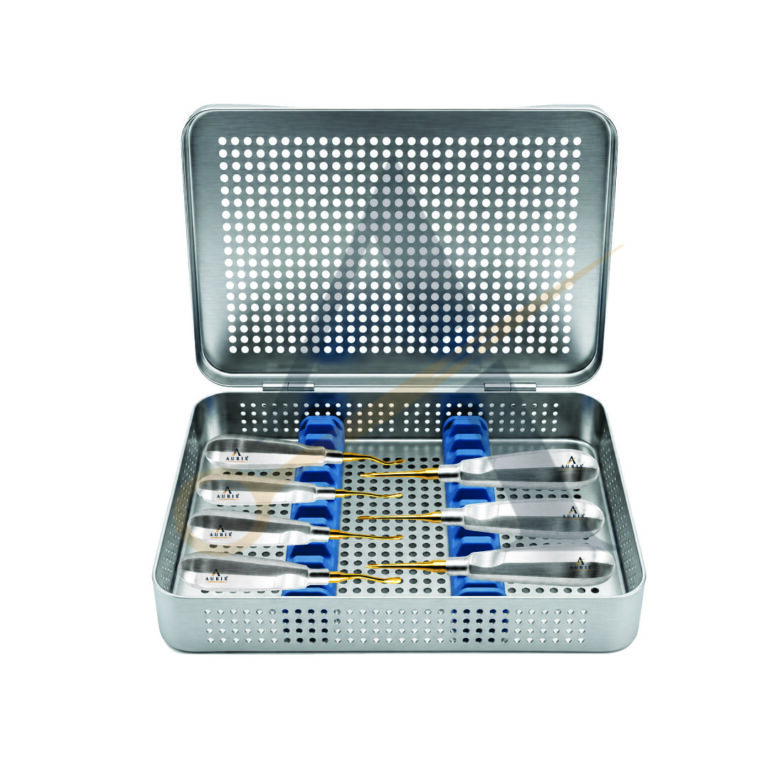
Forceps are not designed to pull a tooth straight out. Instead, the clinician usually loosens the tooth first with root elevators. Then, the forceps beaks are pushed apically along the root surface, and slow, controlled movements expand the socket. Finally, the tooth is delivered with a gentle rotational or buccal movement. After removal, a bone curette helps clean the socket.
Also, this approach reduces the risk of crown or root fracture and protects the surrounding bone.
What Makes Quality Extracting Forceps?
- Forged surgical steel: Forged forceps are stronger than cast ones and resist bending under force.
- Precise beak alignment: Beaks should meet evenly along their length, which spreads the force on the tooth.
- Fine serrations: Inner serrations improve grip without crushing the root.
- Smooth box joint: The joint should move freely with no wobble.
- Ergonomic handles: Comfortable handles give better leverage and reduce fatigue.
Care and Maintenance of Extracting Forceps
Clean the joint carefully, because debris can collect there. Use an ultrasonic cleaner, then dry the forceps and apply instrument lubricant to the hinge. Autoclave them in the open position so steam reaches every surface. Moreover, check beaks regularly for cracks or misalignment.
Want to learn more about the background? Read this overview of dental extraction on Wikipedia. When you are ready to buy, our team will help you choose the right extracting forceps for your clinic.
Extracting Forceps FAQs
What is the difference between English and American pattern forceps?
English patterns often have hinges in a vertical plane and different handle designs, while American patterns have horizontal hinges. Both work well; choice depends on training and preference.
Should I buy forceps individually or as a set?
Sets offer better value for new clinics and schools. Single forceps are useful for adding or replacing specific patterns.
Does Aurix offer custom forceps sets?
Yes. We can build sets to your list and add private labelling for distributors.
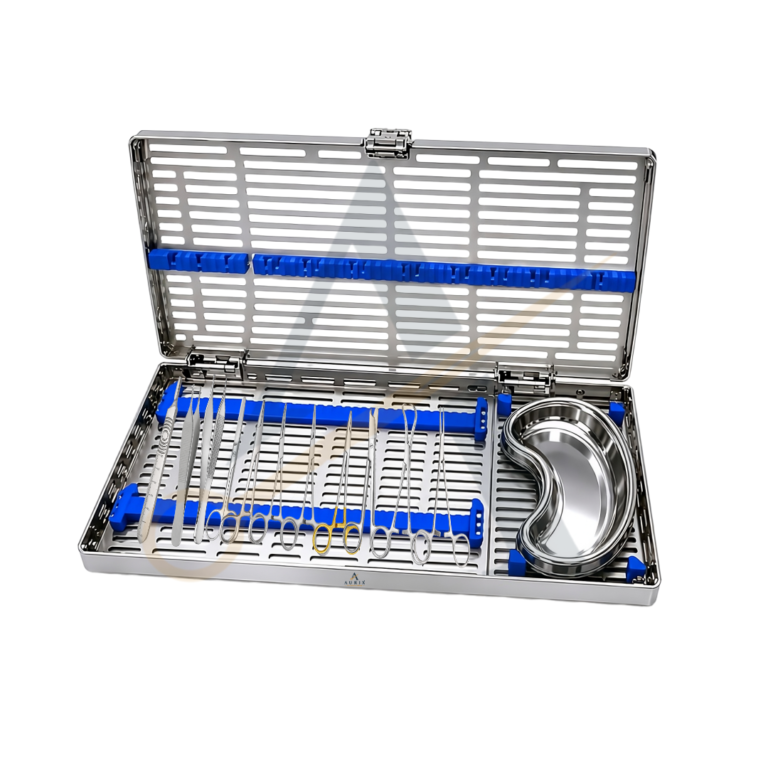
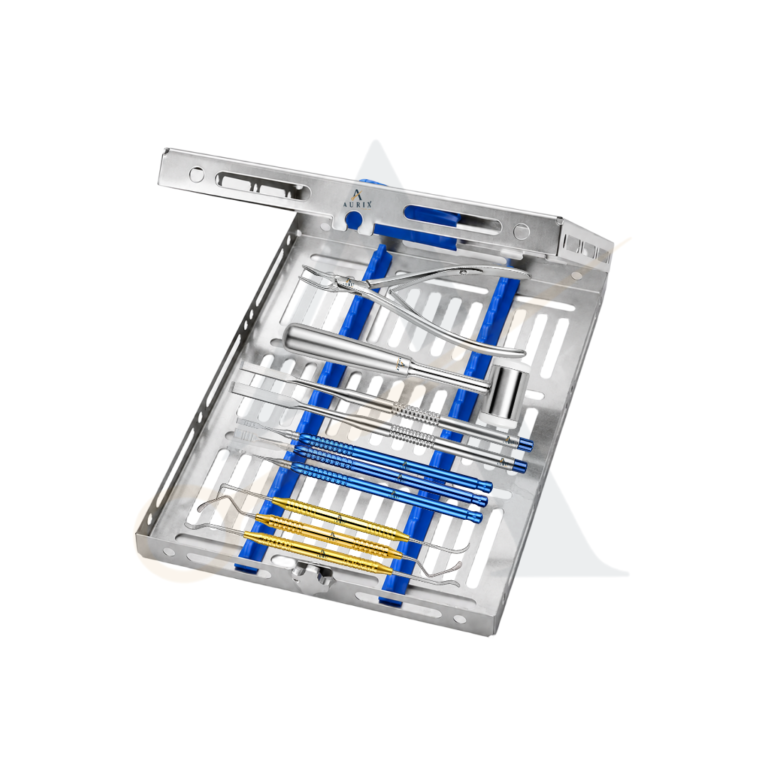
In fact, explore our complete range of extracting forceps in our catalogue, or save time with a ready-made dental surgical set.
Order Extracting Forceps from Aurix International
Aurix International manufactures dental and surgical instruments in Sialkot, Pakistan, and supplies clinics, hospitals and distributors worldwide. We offer wholesale pricing, private labelling, custom kits and flexible order quantities. Need a mixed tray? Try our Medical Kit Builder, or contact us today for a fast quote.