Orthodontic treatment is all about small, precise movements. A wire bend of less than a millimetre, or a bracket placed slightly off-centre, can change how a tooth moves. That is why orthodontic instruments must be accurate, well aligned and comfortable to use. In this guide, we cover the main orthodontic pliers and hand instruments, explain what each one is used for, and share tips on choosing and caring for them.

Why Orthodontic Instruments Need Special Precision
Unlike many dental tools, orthodontic pliers are used to shape and cut wire, not tissue. Therefore, their tips must meet perfectly and hold their alignment over thousands of uses. Many high-quality pliers use hardened tips or tungsten carbide inserts for this reason. Moreover, since orthodontists use pliers many times in each appointment, handle comfort matters a great deal.
Wire Bending Pliers
- Bird beak pliers: One round beak and one pyramidal beak. They are the classic tool for bending loops and springs in round wire.
- Three-jaw (three-prong) pliers: Make sharp, accurate bends in wire clasps.
- Tweed loop-forming pliers: Have stepped round beaks for making loops of consistent size.
- Light wire pliers: Used for fine adjustments on lighter wires.
- Weingart utility pliers: Tapered, serrated tips for placing and removing archwires.
Cutting Instruments
- Distal end cutters: Cut the end of the archwire behind the last molar tube and hold the cut piece safely, so it does not fall into the mouth.
- Ligature cutters: Small, fine tips cut stainless steel ligatures close to the bracket.
- Hard wire cutters: Designed for thicker and harder wires.
Look for cutters with hardened or carbide-tipped jaws. In addition, they stay sharp longer and cut cleanly.
Band and Bracket Instruments
- Band pushers: Seat molar bands firmly onto the tooth.
- Band seaters (bite sticks): The patient bites on them to seat bands.
- Bracket tweezers and holders: Hold and place brackets accurately during bonding.
- Bracket height gauges: Check that brackets sit at the correct height on each tooth.
- Ligature directors and tuckers: Place elastic or wire ligatures and tuck the ends away.
Removal Instruments
- Bracket removing pliers: Lift brackets off the tooth at the end of treatment with minimal force on the enamel.
- Band removing pliers: One tip rests on the biting surface, while the other lifts the band edge.
- Adhesive removing pliers: Help remove leftover adhesive after debonding.
Building an Orthodontic Starter Kit
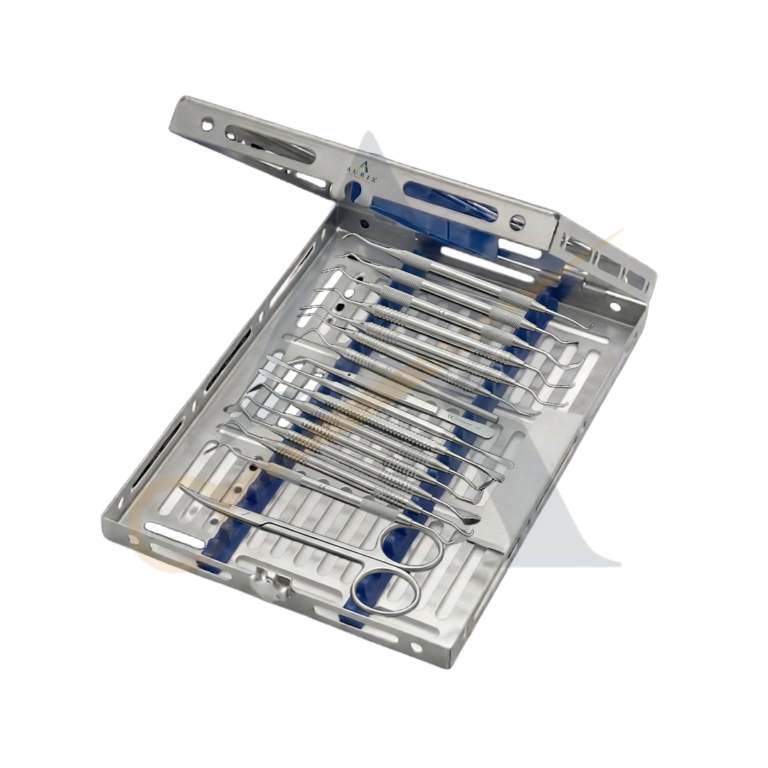
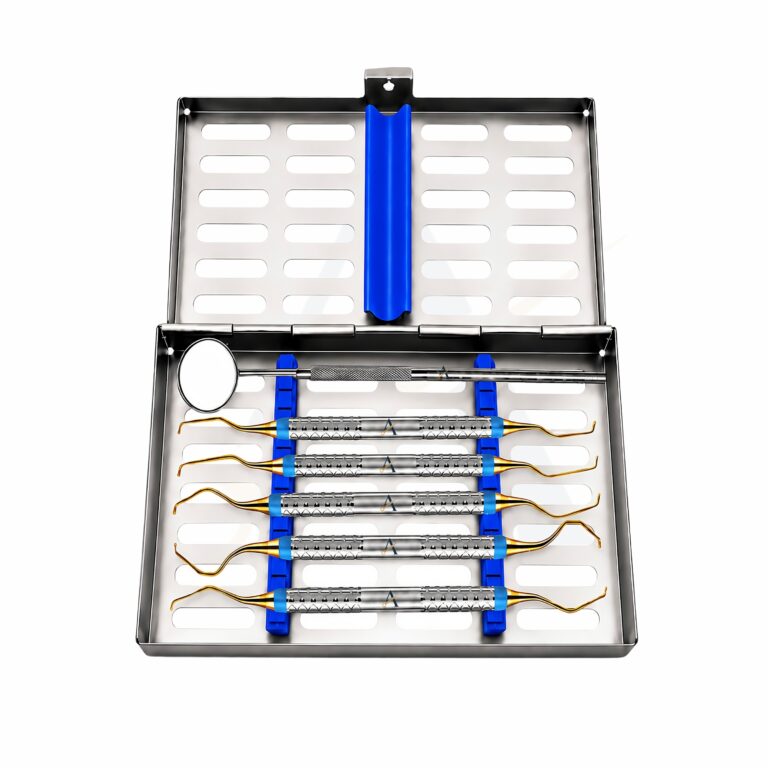
A new orthodontic clinic can start with a core set and then add specialized tools. A practical starter kit might include:
- First, weingart utility pliers
- Next, bird beak pliers
- Then, distal end cutter
- After that, ligature cutter
- Next, band pusher and band seater
- Then, bracket tweezers and height gauge
- After that, bracket removing pliers
- Next, band removing pliers
- Finally, ligature director
In addition, keep a basic exam kit from our diagnostic instruments range in each chair.
What to Look For When Buying Orthodontic Instruments
- Precise tip alignment: Close the pliers and check that tips meet evenly.
- Smooth box joint: The joint should move freely without play.
- Hardened working ends: Carbide inserts increase life on cutters and wire pliers.
- Ergonomic handles: Comfortable handles reduce strain during full days of adjustments.
- Corrosion resistance: Stainless steel should survive repeated autoclaving without spots.
Care and Maintenance of Orthodontic Instruments
Clean pliers soon after use to prevent adhesive and debris from hardening in the joint. Also, use an ultrasonic cleaner, rinse and dry fully. Next, apply a drop of instrument lubricant to the hinge. Finally, sterilize the pliers in the open position. Never use wire pliers or cutters on wire thicker than they are rated for, because this can chip or misalign the tips.
Want to learn more about the background? Read this overview of orthodontics on Wikipedia. When you are ready to buy, our team will help you choose the right orthodontic instruments for your clinic.
Orthodontic Instruments FAQs
Are orthodontic pliers suitable for clear aligner work?
Some are. Special aligner pliers exist for creating bumps and ridges, but standard pliers are designed mainly for fixed appliances.
How long do orthodontic pliers last?
With correct use and care, quality pliers can last many years. Cutters may need sharpening or tip replacement over time.
Can I order a custom ortho kit?
Yes. Aurix International builds custom orthodontic kits with private labelling for distributors.
Moreover, explore our full range of orthodontic instruments in our catalogue.
Order Orthodontic Instruments from Aurix International
Aurix International manufactures dental and surgical instruments in Sialkot, Pakistan, and supplies clinics, hospitals and distributors worldwide. We offer wholesale pricing, private labelling, custom kits and flexible order quantities. Need a mixed tray? Try our Medical Kit Builder, or contact us today for a fast quote.