Oral surgery covers a wide range of procedures, from simple extractions to impacted wisdom teeth, biopsies, cyst removal and pre-prosthetic surgery. Although each case is different, most procedures follow the same basic steps: incision, flap reflection, bone work, tooth or tissue removal, and closure. Each step needs its own group of instruments. This guide lists the essential oral surgery instruments by task, explains what each one does, and gives practical tips on choosing tools that last.

1. Oral Surgery Instruments for Incision
A clean incision is the foundation of good healing.
- Scalpel handle #3: The standard handle for oral surgery.
- Blades #15, #15c and #12: The #15 is the all-rounder, the #15c is smaller for tight spaces, and the curved #12 is ideal for incisions behind molars and around necks of teeth.
Always use a fresh blade for each patient, and pass scalpels with care to avoid injury.
2. Instruments for Flap Reflection
- Periosteal elevators: The Molt #9 is the most common. One end is pointed for releasing papillae, while the other is broad for lifting the flap.
- Retractors: Minnesota, Austin and Seldin retractors hold the flap and cheek away. Explore our dental retractor range.
- Tissue forceps: Adson forceps, with or without teeth, hold soft tissue gently during reflection and suturing.
3. Instruments for Bone Removal and Shaping
- Rongeurs: Side-cutting or end-cutting rongeurs trim sharp bone edges after extractions.
- Bone files: Smooth the bone surface so it does not irritate the gum.
- Chisels and mallets: Used in some techniques for bone removal or splitting teeth.
- Bone curettes: Clean sockets and remove soft tissue from defects. See our bone curettes.
4. Instruments for Tooth Removal
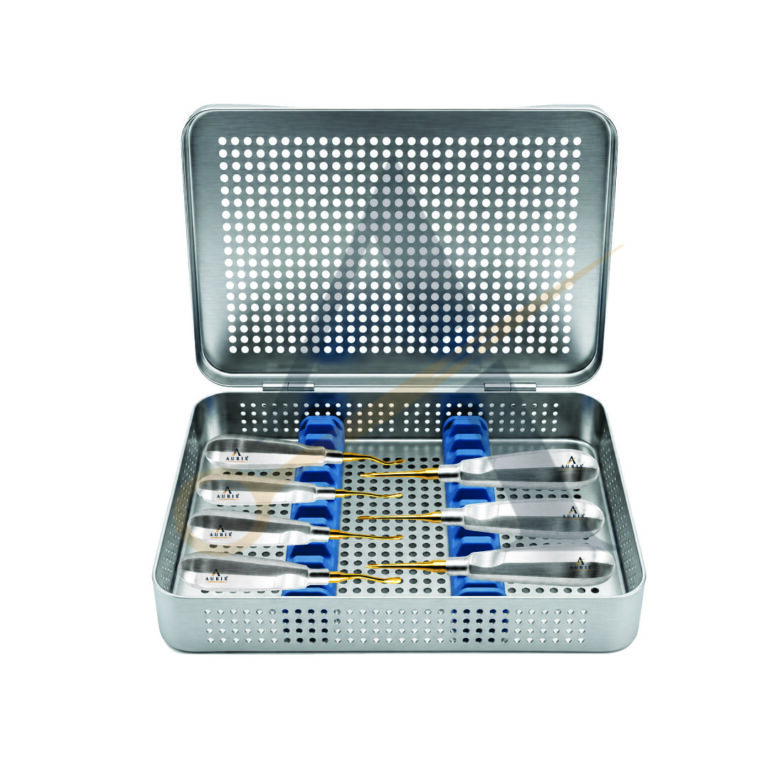
- Root elevators: Straight, Cryer and apical elevators loosen teeth and lift roots. Browse our root elevators.
- Extracting forceps: Patterns for each tooth type complete the removal. See our extracting forceps.
- Luxators: Thin, sharp blades that cut the periodontal ligament with minimal bone damage.
5. Instruments for Suction and Irrigation
Visibility makes surgery safer. A surgical suction tip, such as a Frazier suction, removes blood and saline from the site. Meanwhile, an irrigation syringe cools the bone during drilling and flushes debris from the socket.
6. Instruments for Suturing and Closure
- Needle holders: Mayo-Hegar for general use, and Castroviejo for fine sutures.
- Suture scissors: Dean or Goldman-Fox scissors cut sutures cleanly.
- Hemostats: Mosquito hemostats clamp small vessels and retrieve small fragments.
Organizing Oral Surgery Instruments on a Tray
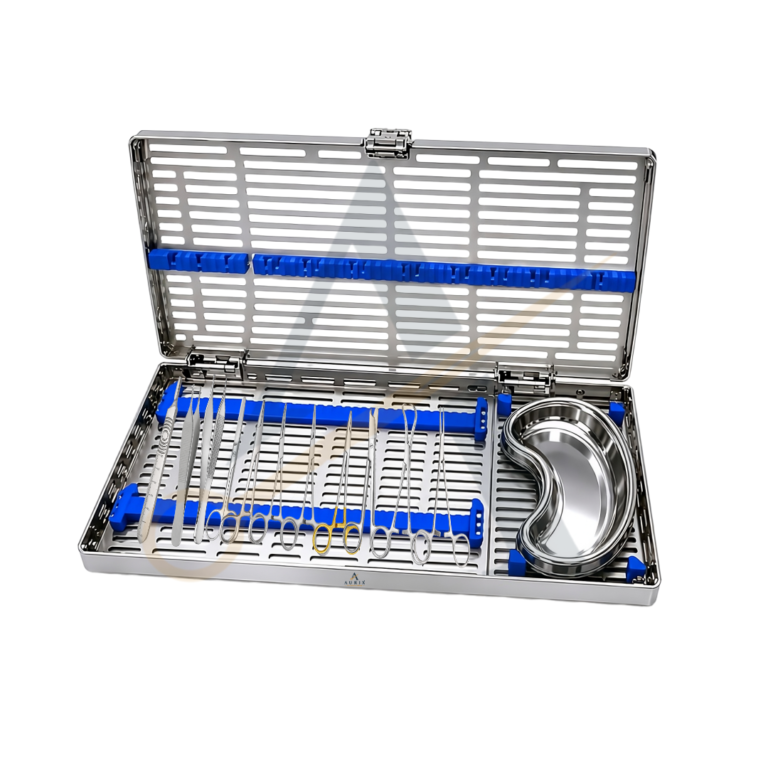
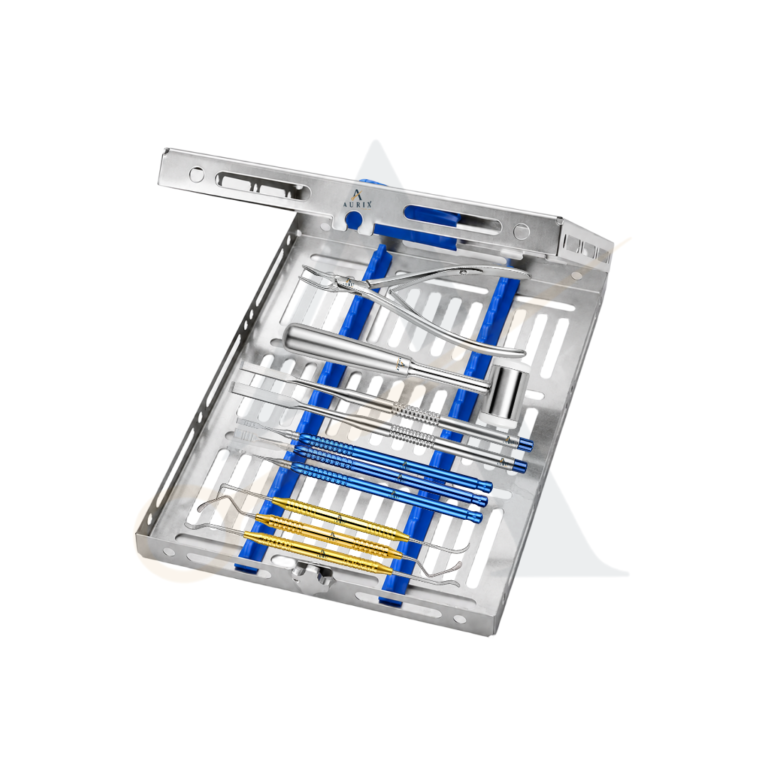
A well-arranged tray saves time and reduces stress. In addition, many surgeons arrange instruments from left to right in the order of use: scalpel, periosteal elevator, retractor, elevators, forceps, curette, rongeur, bone file, needle holder, tissue forceps and scissors. Furthermore, using a cassette keeps the set complete through cleaning and sterilization. If you prefer a ready-to-use option, our dental surgical sets group these tools for you.
How to Choose Quality Oral Surgery Instruments
- Material: Surgical-grade stainless steel with proper hardening.
- Precision: Tips and jaws that meet exactly, with no gaps.
- Smooth joints: Hinged tools should open and close without stiffness or wobble.
- Tungsten carbide inserts: On needle holders and scissors, these give a better grip and longer life.
- Finish: Satin finishes reduce glare under operating lights.
Maintenance Tips for Oral Surgery Instruments
First, remove blood and debris soon after surgery. Next, clean instruments in an ultrasonic bath and rinse well. Then, lubricate hinges and joints with instrument milk. Finally, sterilize in open position and store in a dry place. Also, send dull scissors and rongeurs for sharpening rather than forcing them.
Want to learn more about the background? Read this overview of oral and maxillofacial surgery on Wikipedia. When you are ready to buy, our team will help you choose the right oral surgery instruments for your clinic.
Oral Surgery Instruments FAQs
What are the must-have instruments for a new oral surgery setup?
Start with a scalpel handle, periosteal elevator, retractors, a set of elevators and forceps, a bone curette, a rongeur, a needle holder, tissue forceps and scissors.
Can general dentists use the same instruments?
Yes. Also, most of these tools are used in general practice for routine extractions and minor surgery.
Does Aurix supply hospitals and distributors?
Yes. We supply single instruments, custom kits and bulk orders with private labelling.
Moreover, explore our complete oral surgery instruments in our catalogue collection.
Order Oral Surgery Instruments from Aurix International
Aurix International manufactures dental and surgical instruments in Sialkot, Pakistan, and supplies clinics, hospitals and distributors worldwide. We offer wholesale pricing, private labelling, custom kits and flexible order quantities. Need a mixed tray? Try our Medical Kit Builder, or contact us today for a fast quote.