Generally, stainless steel is resistant to corrosion, not immune to it. Spots, stains and rust on instruments are usually caused by reprocessing conditions rather than by the steel itself. Also, the good news is that most are preventable.
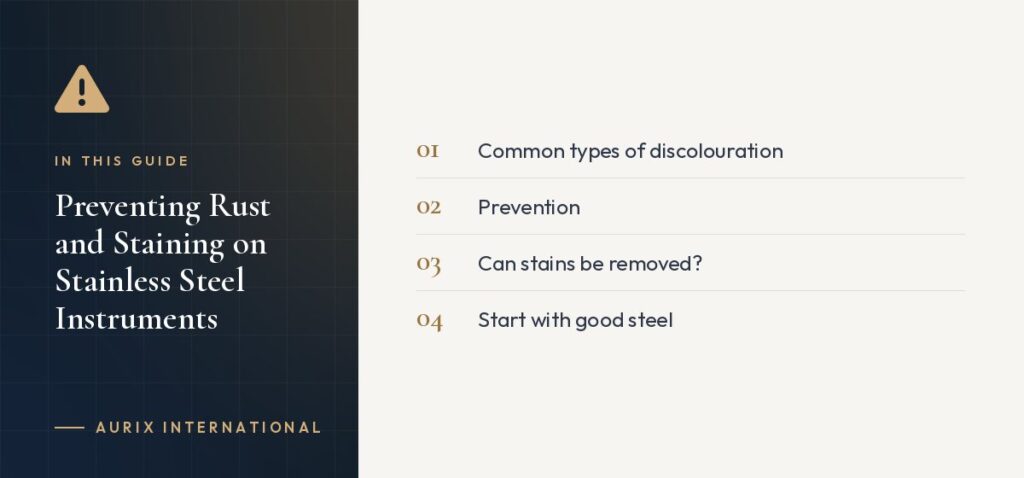
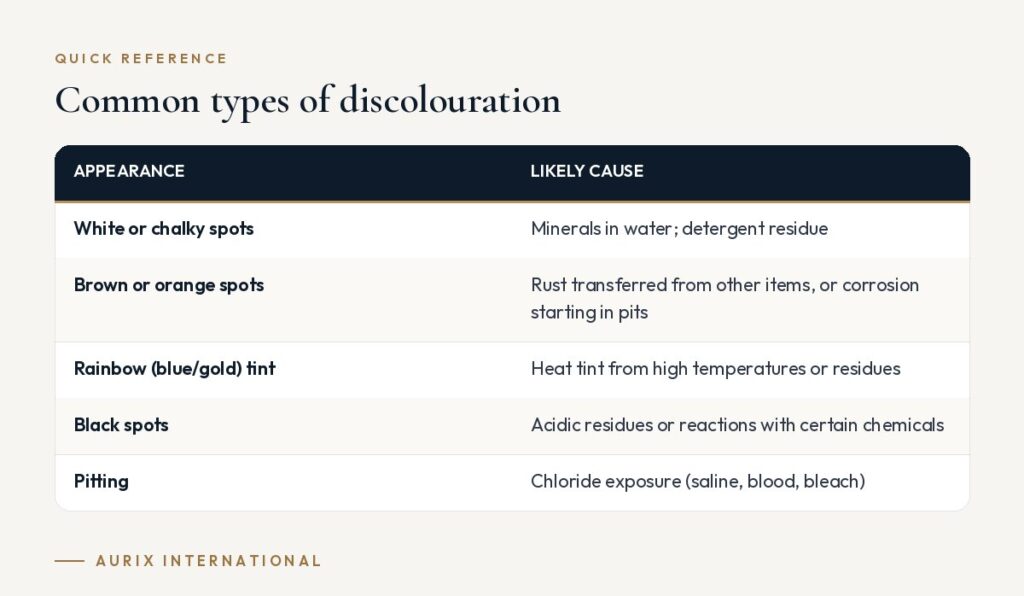
Common types of discolouration
| Appearance | Likely cause |
|---|---|
| White or chalky spots | Minerals in water; detergent residue |
| Brown or orange spots | Rust transferred from other items, or corrosion starting in pits |
| Rainbow (blue/gold) tint | Heat tint from high temperatures or residues |
| Black spots | Acidic residues or reactions with certain chemicals |
| Pitting | Chloride exposure (saline, blood, bleach) |
Prevention
Clean promptly
In general, blood and saliva contain chlorides that attack stainless steel. Clean instruments as soon as possible and do not let debris dry.
Avoid harmful chemicals
Generally, do not soak instruments in saline, bleach or high-chloride solutions. In addition, use neutral or mildly alkaline instrument detergents.
Use quality water
In general, use distilled, deionised or reverse-osmosis water in the autoclave and for final rinsing to prevent mineral spots.
Rinse and dry thoroughly
Generally, detergent residues and moisture left on instruments cause staining. Make sure the autoclave drying cycle completes.
Separate damaged instruments
In general, rust can transfer from a corroded instrument to clean ones. Remove rusty instruments from circulation.
Avoid mixed metals
Do not process carbon steel burs or plated instruments together with stainless steel in the same ultrasonic bath.
Can stains be removed?
Surface spots can often be removed with an instrument stain remover designed for stainless steel. Deep pitting or rust that returns after cleaning means the passive surface is damaged, and the instrument should be replaced.
Start with good steel
Properly hardened and passivated surgical-grade stainless steel resists corrosion best. Learn more in our guide to surgical stainless steel grades.