
The cheapest single order is rarely the best value. Practices, groups and distributors that build long-term relationships with a dental instruments supplier usually get better service, faster problem-solving, priority on stock and pricing that reflects the whole relationship rather than one invoice. This guide explains how to build that partnership and how to measure whether it is working.
Key takeaways
- Share forecasts and feedback; expect transparency in return.
- Track a few simple KPIs: on-time delivery, accuracy, defects, response time.
- Hold an annual review covering quality, delivery, pricing and plans.
- Move on if problems persist despite clear feedback.
What a good partnership looks like
- The supplier understands your procedures and preferred patterns.
- Reorders are simple and accurate, using saved kits and SKUs.
- Problems are acknowledged and solved quickly and fairly.
- You hear early about new kits, products, price changes and supply issues.
- Pricing reflects your annual volume and reliability.
- The supplier helps with new projects — a new location, new procedures or a branded range.
Your side of the partnership
- Share forecasts. Even rough annual estimates help suppliers hold stock for you.
- Standardise. Consistent patterns make supply reliable and cheaper.
- Give feedback. Tell the supplier what works and what does not — with specifics.
- Plan ahead. Avoid unnecessary rush orders.
- Pay on time. Reliable customers earn flexibility when they need it.
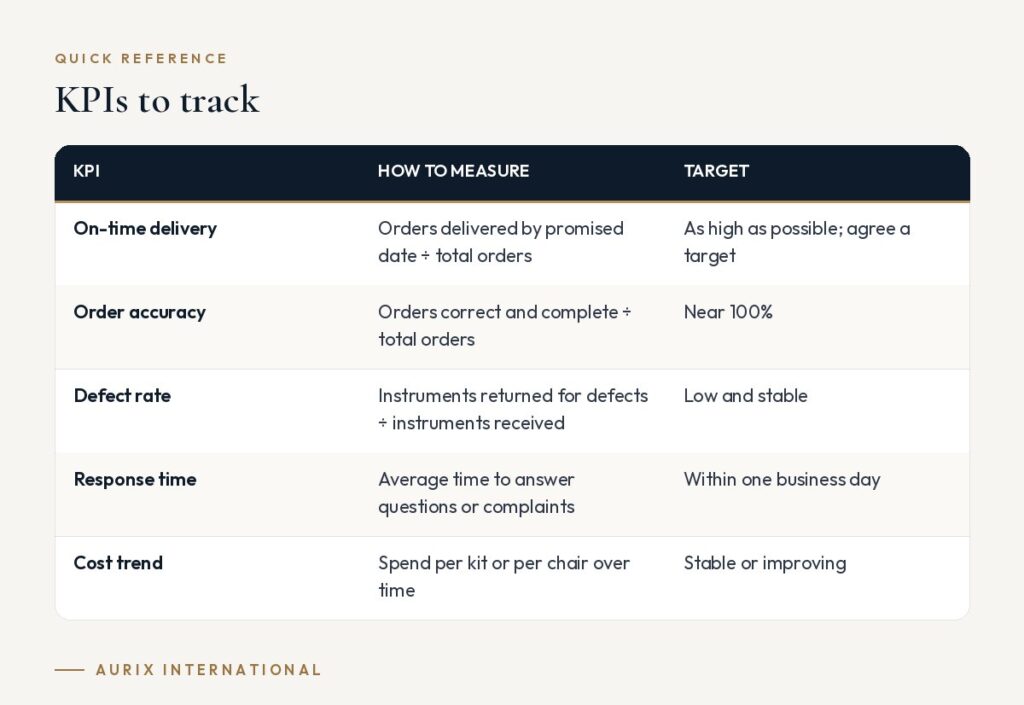
KPIs to track
| KPI | How to measure | Target |
|---|---|---|
| On-time delivery | Orders delivered by promised date ÷ total orders | As high as possible; agree a target |
| Order accuracy | Orders correct and complete ÷ total orders | Near 100% |
| Defect rate | Instruments returned for defects ÷ instruments received | Low and stable |
| Response time | Average time to answer questions or complaints | Within one business day |
| Cost trend | Spend per kit or per chair over time | Stable or improving |
Annual review agenda
| Topic | Questions |
|---|---|
| Quality | Recurring defects? Any changes in finish or consistency? |
| Delivery | On time and complete? Any stock issues? |
| Pricing | Do tiers reflect current volume? |
| Range | New kits or instruments worth adopting? |
| Documentation | Up-to-date reprocessing instructions and registrations? |
| Plans | New locations, procedures or branding projects? |
Growing together
As practices add chairs, open new sites or introduce new procedures, a supplier who already knows your standards can scale with you quickly. Distributors who start with a small private-label range can expand it with a partner who understands their market. The value of the relationship compounds over time.
Sharing information both ways
Strong relationships depend on openness. You share forecasts, changes and feedback; your supplier shares lead times, new products and early warning of supply issues. This lets both sides plan and avoid surprises — especially valuable when global supply chains are disrupted. See global dental supply chains in 2026.
When to move on
If quality, delivery or service keeps slipping despite clear, documented feedback, it may be time to change. Use our switching plan to do it without disruption.
Frequently asked questions
Does loyalty really earn better prices?
Predictable volume usually does. Discuss tiers based on annual spend.
Should distributors sign exclusive agreements?
Exclusivity can bring benefits such as territory protection, but agree clear performance terms first.
How often should we talk to our supplier?
Regularly through normal ordering, plus a structured review at least once a year.
Next steps
Aurix values long-term partnerships with clinics, groups, schools and distributors. Start a conversation, or compare the market in our top 10 US supplier guide.