
Sometimes a supplier stops meeting your needs. Quality slips, deliveries arrive late or incomplete, patterns change without warning or prices rise without explanation. Switching dental instruments suppliers can feel daunting, but with a simple phased plan it is easier — and less disruptive — than most practices expect.
Key takeaways
- Document exactly what you use before approaching new suppliers.
- Test samples clinically and through reprocessing.
- Transition procedure by procedure, never mixing patterns within a kit.
- Review quality and delivery after 90 days.
Signs it is time to switch
- Instruments rust, stain or blunt sooner than they used to.
- Repeated late, partial or incorrect deliveries.
- Patterns change without notice.
- Slow or unhelpful responses to problems.
- Pricing no longer competitive for your volume.
- No kits or customisation as your practice grows.
The phased switching plan
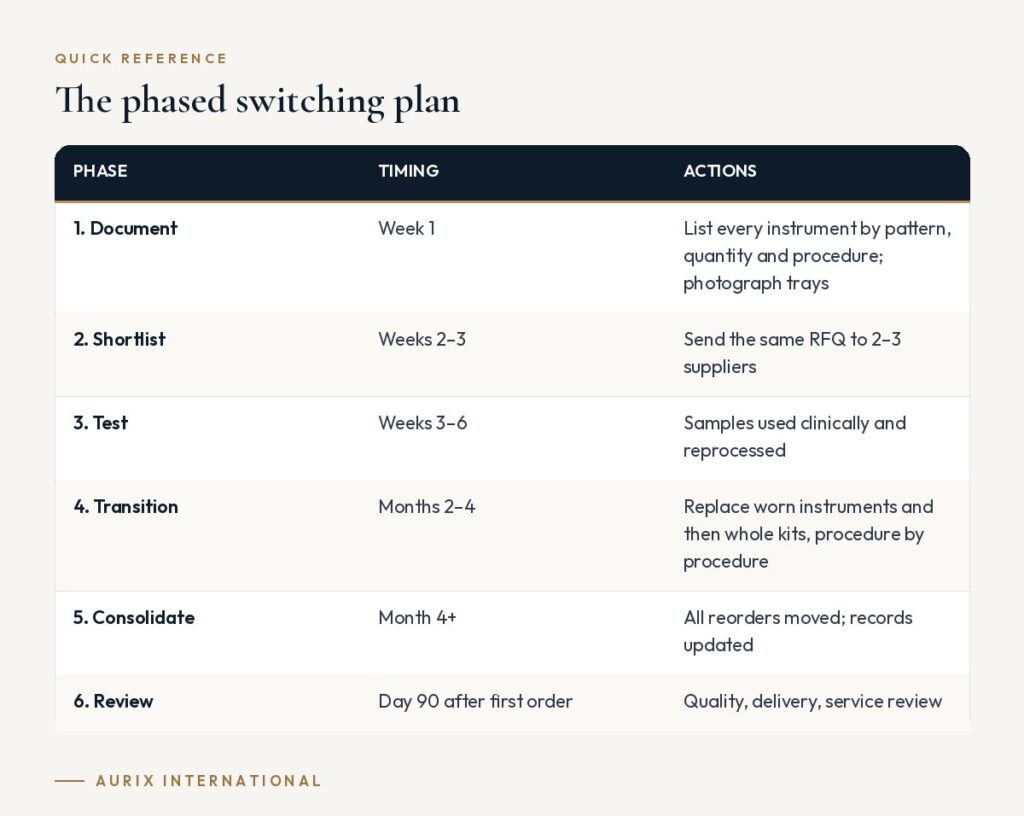
| Phase | Timing | Actions |
|---|---|---|
| 1. Document | Week 1 | List every instrument by pattern, quantity and procedure; photograph trays |
| 2. Shortlist | Weeks 2–3 | Send the same RFQ to 2–3 suppliers |
| 3. Test | Weeks 3–6 | Samples used clinically and reprocessed |
| 4. Transition | Months 2–4 | Replace worn instruments and then whole kits, procedure by procedure |
| 5. Consolidate | Month 4+ | All reorders moved; records updated |
| 6. Review | Day 90 after first order | Quality, delivery, service review |
Step details
Document what you use
Your instrument list becomes the specification for new suppliers. Include pattern names, quantities per kit and any features such as carbide inserts.
Request comparable quotes
Use our RFQ template and comparison method.
Test samples
Ask the clinicians who use the instruments to evaluate them and run them through several sterilisation cycles — see the sample protocol.
Transition gradually
Start by ordering replacements from the new supplier as old instruments wear out, then replace complete kits one procedure at a time. Never mix patterns within a single kit.
Update records
Update SKUs, kit checklists, inventory and reorder points so staff order the right items.
Communicating the change
Instruments are personal tools. Explain why you are switching, involve the team in testing and highlight improvements they will notice — sharper curettes, smoother forceps, better-organised kits — rather than only cost savings.
Ending the old relationship professionally
Close open orders, settle invoices and resolve outstanding warranty claims. A professional exit keeps the door open for unusual items in future.
Use the switch to improve
A supplier change is a good moment to review kits: remove unused instruments, standardise patterns across rooms and introduce cassettes if you do not use them yet. Many practices find this reorganisation delivers as much benefit as the new supplier.
The 90-day review
- Have instruments matched the samples?
- Were deliveries complete and on time?
- How were questions and problems handled?
- Has total cost met expectations?
Frequently asked questions
Do I have to replace all instruments at once?
No. A gradual transition spreads cost and reduces disruption.
Can a new supplier match my existing patterns?
Often. Share photos, pattern names and samples of your current instruments.
How long does a switch take?
Typically two to four months from first contact to full transition.
Next steps
Thinking of switching? Send Aurix your instrument list for a matched quote. Read the supplier buyer’s guide and compare names in our top 10 US guide.