If you want instruments made to your specifications and sold under your name, you need an OEM dental instruments supplier. The choice affects product quality, delivery reliability, regulatory compliance and the reputation of your brand for years. Many OEM articles online are thin sales pages; this guide gives you a practical process from specification to first production run.
Key takeaways
- OEM means production to your specifications; private label means branding existing designs.
- Clear specifications and “golden samples” protect quality.
- Put quality acceptance, IP protection and lead times in writing.
- Understand your regulatory role as brand owner, importer or distributor.
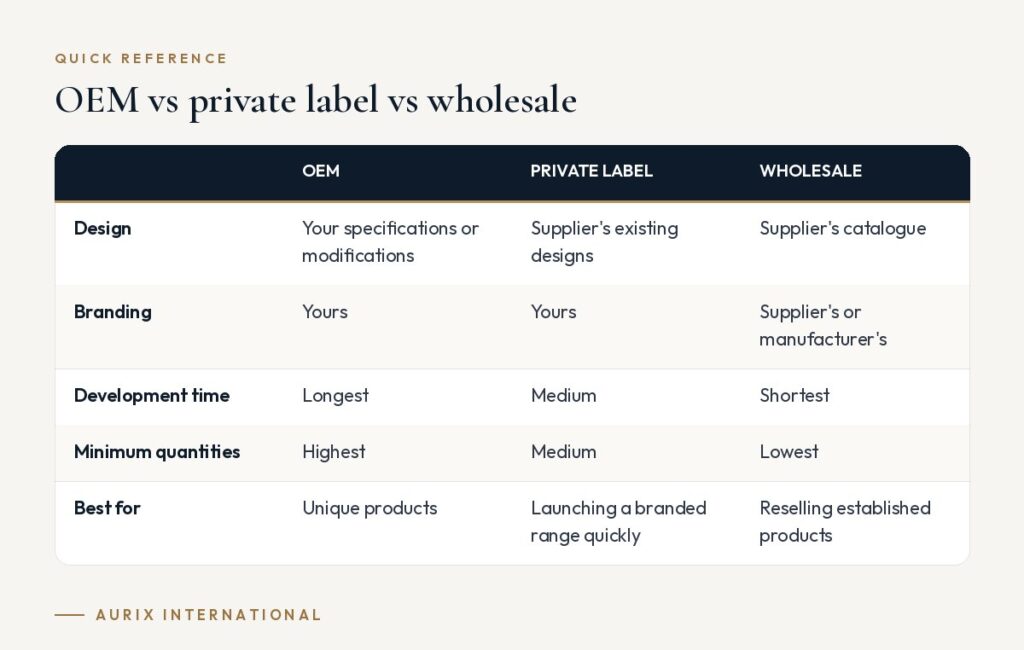
OEM vs private label vs wholesale
| OEM | Private label | Wholesale | |
|---|---|---|---|
| Design | Your specifications or modifications | Supplier’s existing designs | Supplier’s catalogue |
| Branding | Yours | Yours | Supplier’s or manufacturer’s |
| Development time | Longest | Medium | Shortest |
| Minimum quantities | Highest | Medium | Lowest |
| Best for | Unique products | Launching a branded range quickly | Reselling established products |
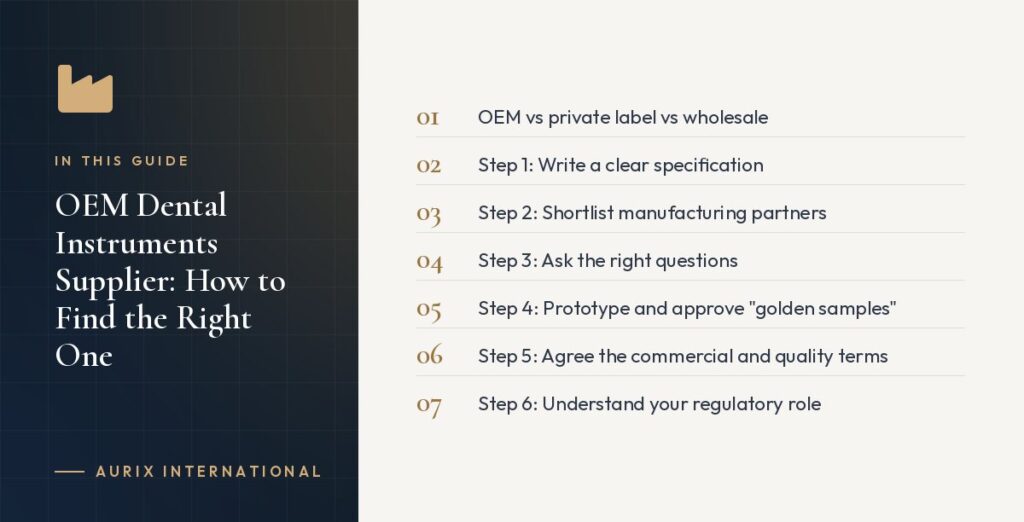
Step 1: Write a clear specification
- Pattern and intended use.
- Dimensions and tolerances (length, tip size, angles).
- Material grade and hardness requirements.
- Finish (satin or mirror) and passivation requirement.
- Marking content and position.
- Packaging, labelling and instructions for use.
The clearer the brief, the better and faster the samples.
Step 2: Shortlist manufacturing partners
Look for specific experience in dental and surgical instruments rather than general metalwork, existing OEM or private-label clients, and a mature quality system. ISO 13485 certification is a useful indicator: since February 2, 2026, the FDA’s Quality Management System Regulation incorporates ISO 13485:2016 by reference, so alignment with it is the baseline expectation for device manufacturers serving the US.
Step 3: Ask the right questions
- Which instruments have you produced for other brands? Can we see examples?
- How do prototyping and approval work, and how long do they take?
- What inspections are performed, and are results documented?
- How do you protect our designs and confidentiality?
- What are your minimum quantities and lead times — including packaging?
- Which documents can you provide for labelling and regulatory purposes?
- How are your establishments registered for the markets we will sell in?
Step 4: Prototype and approve “golden samples”
Evaluate samples clinically, dimensionally and through repeated reprocessing. Once approved, keep signed golden samples — reference instruments that all future production is compared against. See our sample testing protocol.
Step 5: Agree the commercial and quality terms
| Term | Why it matters |
|---|---|
| Specification and golden samples | Define what “correct” means |
| Quality acceptance criteria | How defects are identified and handled |
| MOQ and pricing tiers | Commitment and margin |
| Lead times (product and packaging) | Launch planning |
| Payment terms | Cash flow |
| IP and confidentiality | Protects your designs and brand |
| Change control | No silent changes to materials or processes |
Step 6: Understand your regulatory role
In the US, roles carry different FDA obligations. Foreign manufacturers must register before exporting devices to the US and designate a US agent; initial importers must register too. Companies that develop specifications or relabel devices may take on manufacturer-type obligations. Many dental hand instruments are Class I devices under 21 CFR 872.4565 and 510(k) exempt subject to limitations. This is general information — take specialist regulatory advice before launch.
Step 7: Start with a moderate first run
A first production run of moderate size confirms quality, packaging and demand before you scale. Compare production instruments against golden samples on arrival.
Protecting your brand long term
- Inspect incoming batches against golden samples.
- Track defects by batch and share data with your partner.
- Forecast demand and plan production ahead of peak seasons.
- Review the partnership annually.
Planning your range
Successful OEM ranges usually start narrow and grow. Begin with instruments you know your customers buy repeatedly, such as diagnostic instruments, extraction forceps and elevators. Add procedure kits once the core range is established — kits are attractive to clinics and differentiate your brand.
Frequently asked questions
How long does an OEM project take?
From specification to first delivery typically several months, depending on prototyping rounds, approvals and packaging.
What is a golden sample?
An approved reference instrument used to check future production against your specification.
Can I start with private label and move to OEM later?
Yes — many brands launch with private label and add OEM designs once established. See private label suppliers.
Next steps
Aurix offers OEM manufacturing backed by four generations of instrument-making experience. Discuss your project, read OEM manufacturing explained, or see how the wider market looks in our top 10 US dental instrument suppliers.