When your brand is on the handle, your supplier’s quality becomes your reputation. A good private label dental instruments supplier makes it easy to launch a professional range and never gives you a reason to worry about what is inside the box. This guide explains exactly what to evaluate, the questions to ask and the mistakes to avoid.
Key takeaways
- Ask to see existing private-label work and branded samples.
- Test consistency across batches, not just one sample.
- Plan packaging lead times separately from instrument lead times.
- Start with high-turnover instruments and add kits later.
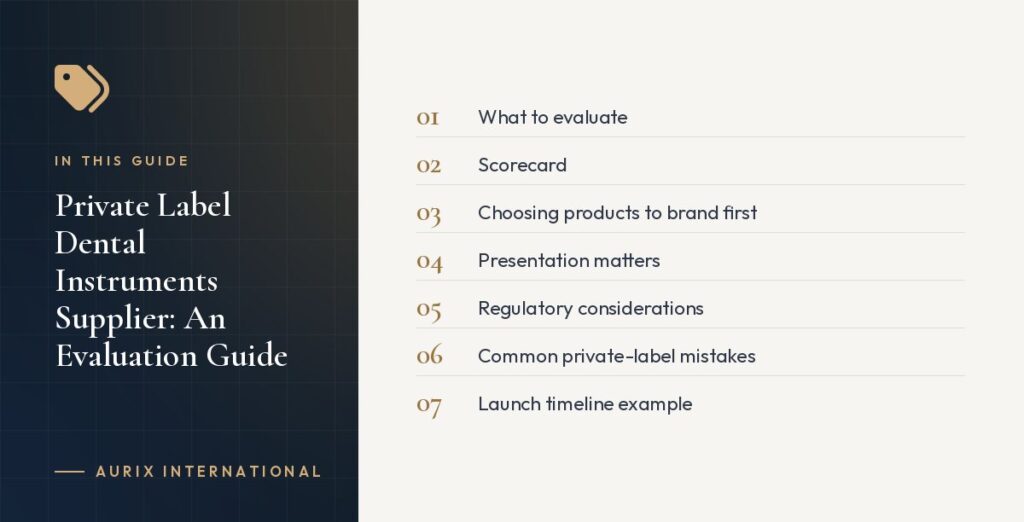
What to evaluate
1. Range
Can the supplier cover everything you want to sell — diagnostic instruments, forceps, elevators, hygiene instruments and procedure kits — so your brand looks complete?
2. Quality and consistency
Ask for material specifications, passivation and inspection processes. Test samples from more than one batch if possible: consistency, not a single perfect sample, is what protects your brand.
3. Branding capability
- Laser marking on instruments (legible on narrow handles, applied without damaging corrosion resistance).
- Branded cassettes and retail or clinical packaging.
- Labels and instructions for use.
4. Proven private-label experience
Ask for examples of existing private-label work and a physical branded sample. A supplier who cannot show any is asking you to fund their first attempt.
5. Commercial terms
Minimum order quantities, pricing tiers, payment terms and lead times determine profitability. Custom packaging often has its own lead time — plan for it.
6. IP and confidentiality
Your branding and any custom elements should be protected by contract.
7. Launch support
Product data, dimensions, images and reprocessing instructions save weeks when building catalogues.
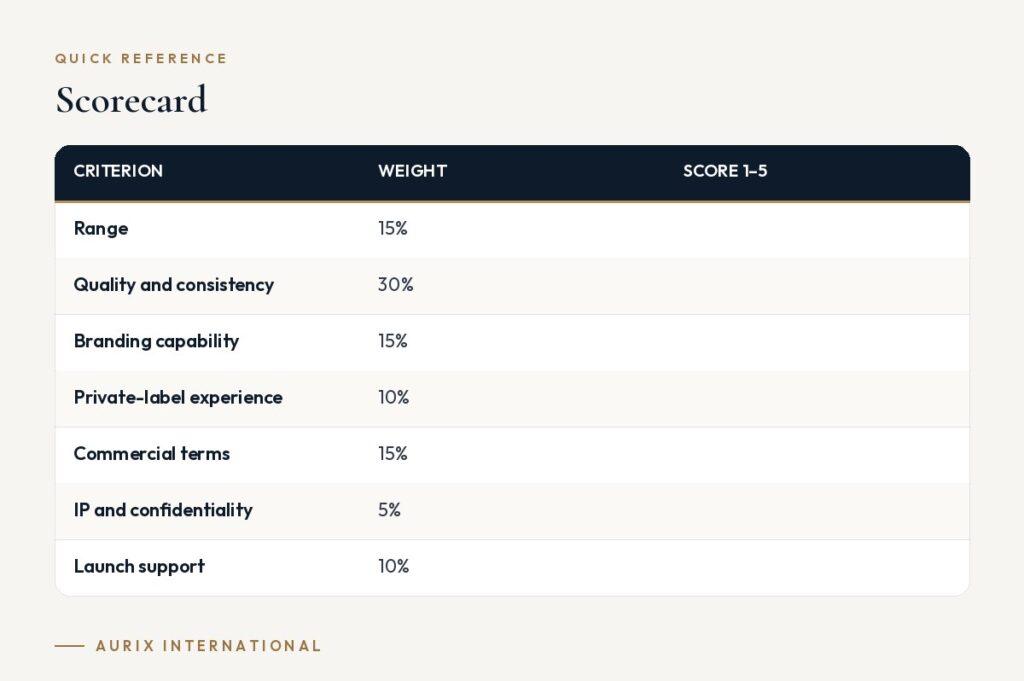
Scorecard
| Criterion | Weight | Score 1–5 |
|---|---|---|
| Range | 15% | |
| Quality and consistency | 30% | |
| Branding capability | 15% | |
| Private-label experience | 10% | |
| Commercial terms | 15% | |
| IP and confidentiality | 5% | |
| Launch support | 10% |
Choosing products to brand first
Start with instruments customers reorder often and recognise easily: mirrors, explorers, probes, extraction forceps, elevators and hygiene instruments. These build brand familiarity quickly. Add procedure kits next — branded kits in cassettes are attractive to clinics and differentiate your range. Specialist low-volume instruments can follow later.
Presentation matters
A private-label range is judged by presentation as much as instruments. Consistent marking, clear packaging, accurate descriptions and good photography make a young brand look established.
Regulatory considerations
Selling under your own brand can change your regulatory responsibilities depending on your market and whether you relabel, repackage or import. In the US, many dental hand instruments are Class I devices, and registration and listing obligations apply to the businesses involved. Take specialist advice before launch.
Common private-label mistakes
- Launching too many SKUs and tying up cash in slow sellers.
- Branding that is unreadable on narrow handles.
- Skipping marked-sample approval before full production.
- Forgetting packaging lead times.
- Underestimating reorder lead times for best sellers.
Launch timeline example
| Month | Activity |
|---|---|
| 1 | Define range and request samples |
| 2 | Evaluate samples; design branding and packaging |
| 3 | Approve marked samples; place first order |
| 4–5 | Production, packaging, delivery; build catalogue |
| 6 | Launch and plan reorders |
Frequently asked questions
Can I private-label kits as well as instruments?
Yes, and branded kits in cassettes are often among the most attractive products for clinics.
What minimum order should I expect?
It varies by supplier and product; marking and custom packaging usually raise minimums.
How do I keep quality consistent after launch?
Keep approved samples as references and check incoming batches against them.
Next steps
Aurix provides private label and custom branding for distributors worldwide. Read how to launch your own instrument brand, compare the market in our top 10 guide, or talk to us.