Generally, new dental assistants have a lot to learn. Also, instrument identification is one of the first skills they need and one of the most important for smooth procedures. A structured training plan helps them learn quickly.
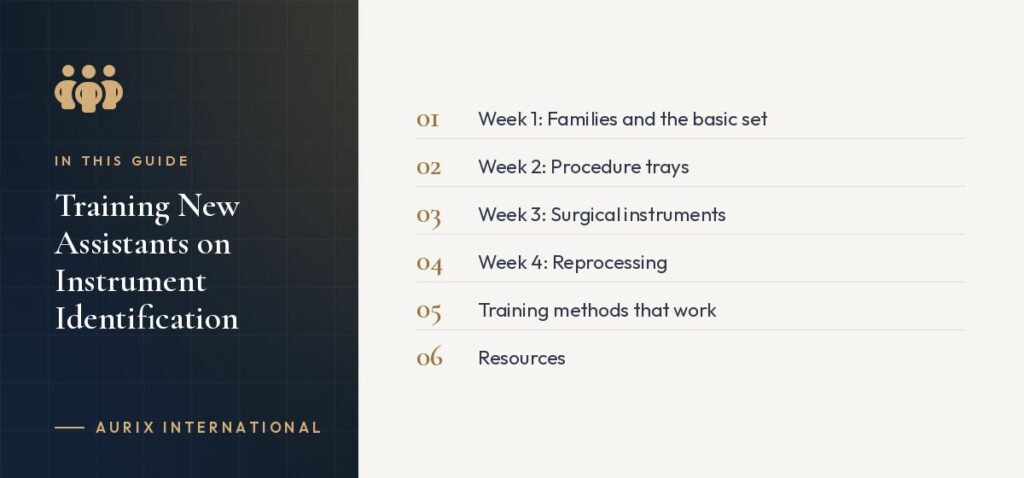
Week 1: Families and the basic set
- Introduce instrument families: examination, cutting, grasping, retracting, elevating.
- Learn the basic examination set until it is automatic.
- Practise setting up an examination tray.
Week 2: Procedure trays
- In general, learn hygiene and restorative trays, instrument by instrument.
- Generally, set up each tray from a checklist and have it checked.
Week 3: Surgical instruments
- In general, learn extraction forceps (upper vs lower, molar patterns).
- Generally, learn elevators, retractors and suturing instruments.
- Observe surgical procedures, naming instruments as they are used.
Week 4: Reprocessing
- In general, learn cleaning, inspection, packaging and sterilisation.
- Generally, learn how to identify damaged instruments.
Training methods that work
- Hands-on sorting: mix instruments and have the trainee sort them.
- Flashcards with photos: useful for revision.
- Naming aloud: clinicians name each instrument as they request it.
- Consistent layouts: identical trays in every room.
- Quizzes: short, regular checks build confidence.
Resources
Our surgical instrument basics and glossary make useful reference material for new team members.