
Sterile packs can become contaminated during storage through moisture, dust, damage or excessive handling. Good storage practice protects the work done in the sterilisation room.
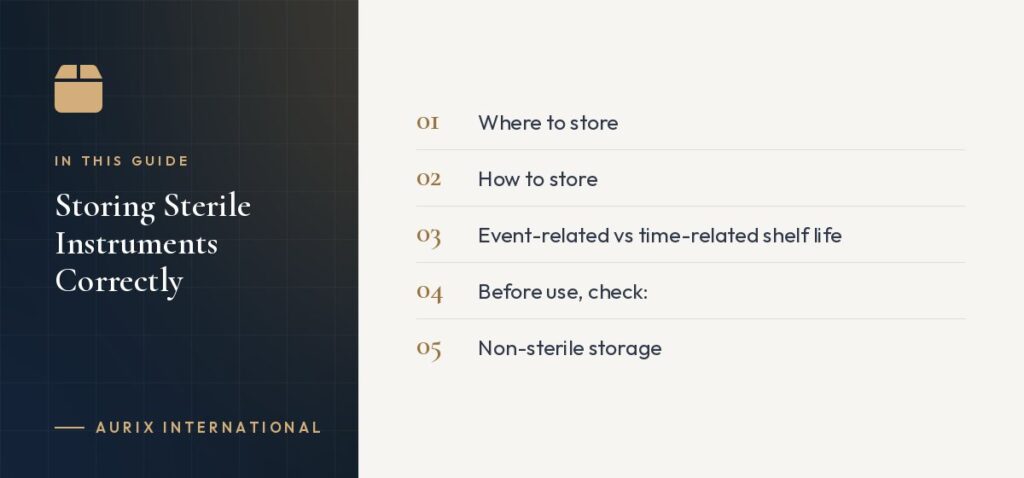
Where to store
- In closed cabinets or drawers, away from sinks and splash zones.
- Off the floor and away from outside walls where condensation can form.
- In a clean, dry area with limited traffic.
How to store
- Do not overpack shelves; crushed packs can tear.
- Store pouches vertically or loosely stacked.
- Keep cassettes flat in their wraps.
- Rotate stock — use the oldest packs first.
Event-related vs time-related shelf life
Many guidelines consider a pack sterile until an event compromises it (for example, a tear or getting wet), rather than for a fixed time. Follow your local guidance and label packs with the date of sterilisation.
Before use, check:
- The pack is intact, dry and clean.
- The external indicator has changed.
- The label shows the date and load information.
If any check fails, reprocess the instruments.

Non-sterile storage
Instruments that are not used for invasive procedures (such as some examination instruments) may be stored clean rather than sterile, depending on local rules. Keep them covered and separate from sterile stock.
See also: sterilisation pouches and cassette wraps.