
New instruments should be inspected before they enter circulation. A quick receiving check catches shipping damage and manufacturing defects while it is still easy to return or exchange items.
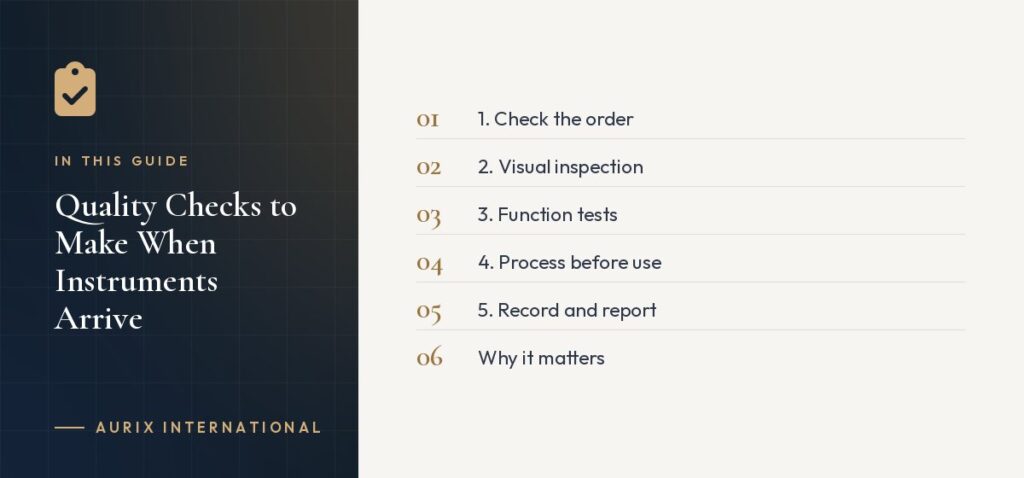
1. Check the order
- Compare the packing list with your order: patterns, sizes and quantities.
- Check that kits contain every listed instrument.
2. Visual inspection
- Look for scratches, pits, rust or discolouration.
- Check that markings are clear.
- Inspect under magnification for cracks, especially around joints.
3. Function tests
- Hinged instruments: open and close; check smoothness and tip alignment.
- Ratchets: engage and release each tooth.
- Scissors: cut a piece of latex or gauze along the full blade.
- Curettes and scalers: test sharpness on a test stick.
- Explorers and elevators: check tips are sharp and straight.
4. Process before use
New instruments are usually supplied non-sterile. They must be cleaned, inspected and sterilised before first use, following the manufacturer’s instructions. Many arrive with a protective oil that needs to be removed.
5. Record and report
- Record receipt and add instruments to your inventory.
- Photograph and report any damage or defects to the supplier promptly.

Why it matters
A defect found on arrival is a simple exchange. A defect found mid-procedure is a problem for both clinician and patient.
If anything in an Aurix order is not right, contact our team and see our shipping policy for details.