
Two instruments made from the same steel can behave very differently in your autoclave. One stays bright for years; the other stains within weeks. Often the difference is in the finishing and passivation.
What is passivation?
Stainless steel resists corrosion because of a thin, invisible layer of chromium oxide on its surface — the passive layer. During manufacturing, grinding and polishing can leave free iron particles on the surface that disrupt this layer. Passivation is a chemical treatment, usually with nitric or citric acid, that removes free iron and helps the passive layer form evenly.
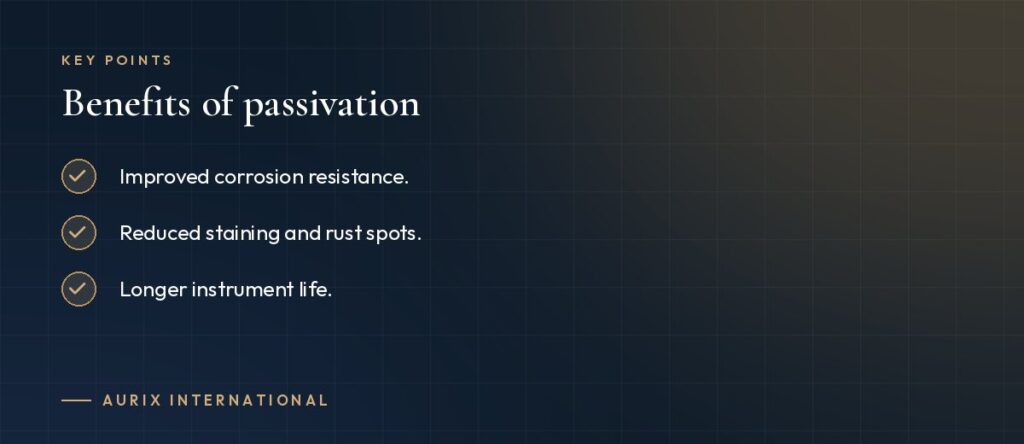
Benefits of passivation
- Improved corrosion resistance.
- Reduced staining and rust spots.
- Longer instrument life.
Surface finishing
Finishing creates the final surface texture. A smooth surface has fewer microscopic pits where debris and moisture can collect. Common finishes include satin (matte) and mirror (polished).
Re-passivation
The passive layer naturally renews itself in the presence of oxygen. However, harsh chemicals, chlorides and abrasive cleaning can damage it. Some sterilisation departments periodically use passivating products to restore older instruments.
How to protect the passive layer
- Avoid chlorides (saline, bleach).
- Use neutral or mildly alkaline detergents.
- Do not scrub with steel wool or abrasive pads.
- Rinse and dry thoroughly.
Questions for suppliers
Ask whether instruments are passivated after finishing and how surface quality is inspected.
See also: satin vs mirror finish and preventing rust and staining.