
Instruments are inspected briefly every time they are packaged. A more thorough monthly inspection, using magnification, catches wear that is easy to miss on a busy day.

What you need
- A well-lit area.
- A magnifying lamp or loupes.
- Test materials: plastic test stick for curettes, latex or gauze for scissors.
- A log sheet or spreadsheet.
Checklist by instrument type
All instruments
- No visible debris, stains or rust.
- No cracks, especially around joints and shanks.
- Markings legible.
Hinged instruments
- Joints move smoothly without lateral play.
- Tips meet evenly when closed.
- Ratchets engage and hold securely.
- No cracks in box joints.
Cutting instruments
- Scissors cut cleanly along the full blade.
- Curettes and scalers pass the sharpness test.
- No nicks or burrs on edges.
Pointed instruments
- Explorers and elevators have sharp, straight tips.
- No bent shanks.
Forceps and needle holders
- Serrations and carbide inserts intact.
- Needles do not rotate when held.
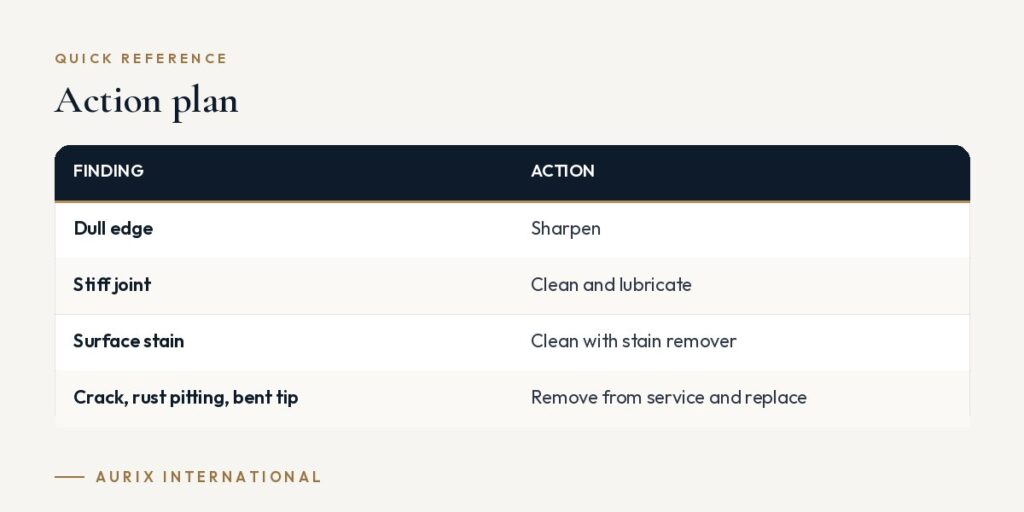
Action plan
| Finding | Action |
|---|---|
| Dull edge | Sharpen |
| Stiff joint | Clean and lubricate |
| Surface stain | Clean with stain remover |
| Crack, rust pitting, bent tip | Remove from service and replace |
Keep a record
Logging inspections helps you see which instruments wear fastest and budget for replacements.
Need replacements? Contact Aurix for individual instruments or complete kits.