The rise of dental implants is creating a new segment within the Gracey curette market. Implant surfaces and abutments need gentle instruments that remove deposits without scratching. Mordor Intelligence projects titanium curettes to grow around 10.7% a year — one of the fastest segments in the market.
Key takeaways
- Hardened stainless curettes can scratch implant surfaces.
- Titanium and plastic curettes are designed for implant maintenance.
- Titanium is one of the fastest-growing material segments.
- Clinics need both stainless Graceys and implant-safe curettes.
Why implants need different instruments
Titanium implants and abutments have surfaces that can be scratched by harder stainless steel instruments. Scratches may encourage plaque retention. Implant maintenance therefore uses instruments made from materials softer than, or similar to, the implant surface.
Implant-safe options
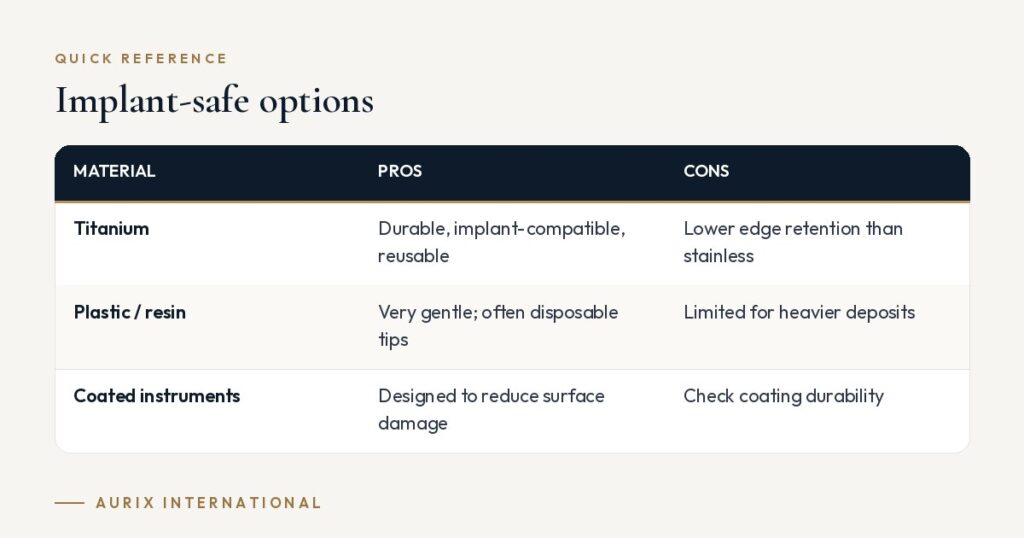
| Material | Pros | Cons |
|---|---|---|
| Titanium | Durable, implant-compatible, reusable | Lower edge retention than stainless |
| Plastic / resin | Very gentle; often disposable tips | Limited for heavier deposits |
| Coated instruments | Designed to reduce surface damage | Check coating durability |
Implant maintenance workflow
- Assess peri-implant tissues and probe gently.
- Remove deposits with implant-safe curettes.
- Use stainless Graceys on natural teeth only.
- Keep implant instruments separate and clearly identified.
Equipping for implant care
- A set of titanium or plastic implant curettes per hygiene operatory.
- Colour-coded handles or cassettes to avoid mix-ups.
- Replacement tips or instruments as edges wear.
Market outlook
As implant placements increase, maintenance visits — and implant-safe curettes — grow with them. This makes implant care a valuable addition for distributors and a necessary investment for clinics.
Keeping implant and natural-tooth instruments separate
Mixing implant-safe and stainless instruments is a common error. Use clearly different handles, colour coding or separate cassettes, and train the whole team to recognise them. Check implant instruments regularly for wear, as softer materials lose their edge sooner.
Planning purchases
- Estimate how many implant maintenance visits you deliver each month.
- Provide one implant-safe set per hygiene operatory, plus spares.
- Continue to maintain full stainless Gracey sets for natural teeth.
For natural teeth, explore stainless curettes in our Gracey Curettes collection.
Signs an implant curette needs replacing
- The edge no longer lifts deposits with light strokes.
- The tip is rounded, chipped or deformed.
- Plastic or resin tips show cracks or have become rough after sterilisation.
- Titanium tips show visible wear or damage.
Because implant instruments are often softer than stainless steel, they wear sooner. Check them at every set inspection and keep spares so a worn instrument never ends up being used on an implant surface. Record replacement dates so you can plan how many to buy each year.
Natural teeth around implants still need full periodontal care, so keep your stainless Gracey sets complete alongside the implant-safe instruments.
Frequently asked questions
Can I use stainless Graceys on implants?
Generally avoid it; use implant-safe instruments.
Are titanium curettes sharpenable?
Some can be lightly sharpened; follow manufacturer guidance.
Stainless Gracey curettes for natural teeth. Explore the Aurix range and ask about implant-care options. View Gracey curettes →
Source: Mordor Intelligence.