
Sustainability is becoming part of purchasing decisions across healthcare, and the Gracey curette market is no exception. Durable, resharpenable stainless steel curettes are inherently more sustainable than single-use alternatives — if they are well made and well maintained.
Key takeaways
- Well-made reusable curettes last hundreds of uses.
- Good sharpening and reprocessing extend life.
- Sets in cassettes reduce packaging waste.
- Stainless steel is recyclable at end of life.
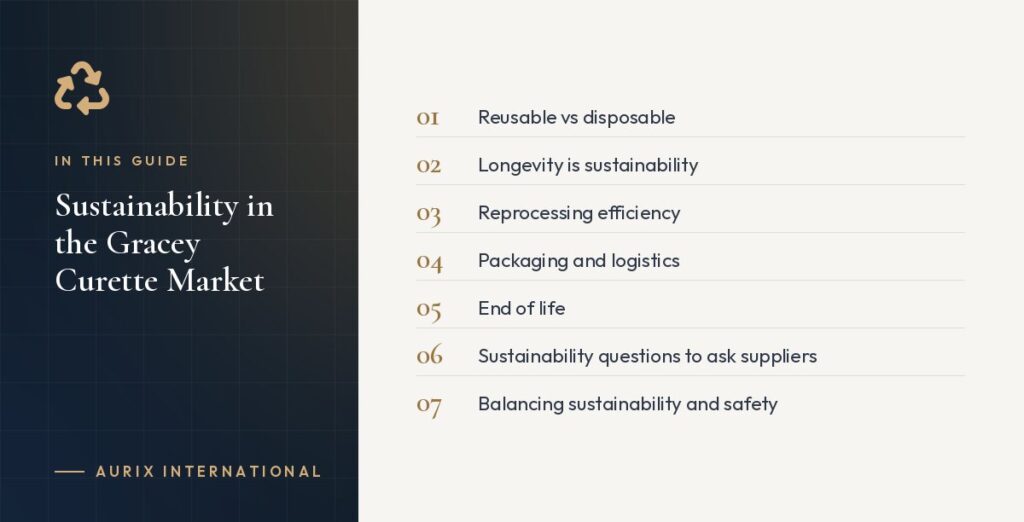
Reusable vs disposable
Reusable stainless curettes are sterilised and resharpened many times. Disposable alternatives avoid reprocessing but create more waste. Where validated reprocessing is available, durable instruments generally have the lower environmental footprint over their lifetime.
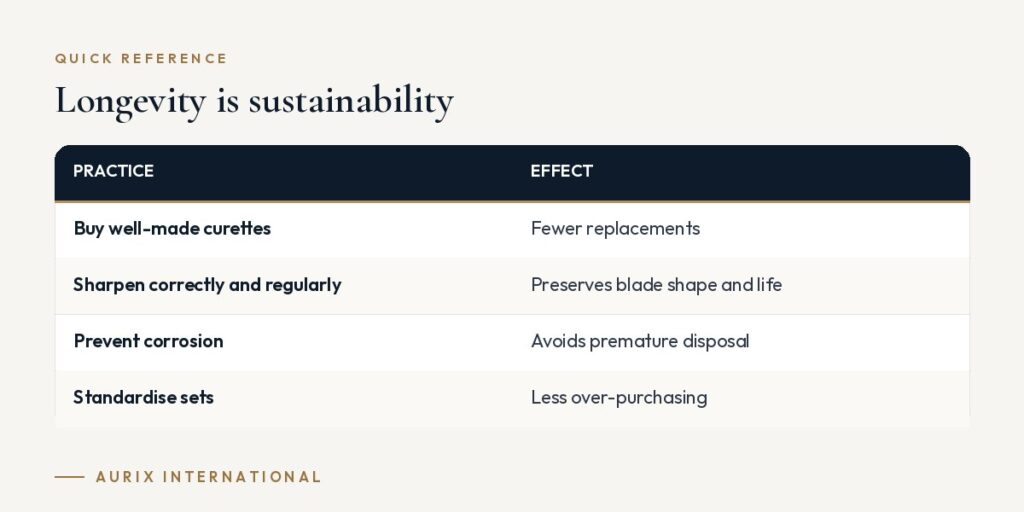
Longevity is sustainability
| Practice | Effect |
|---|---|
| Buy well-made curettes | Fewer replacements |
| Sharpen correctly and regularly | Preserves blade shape and life |
| Prevent corrosion | Avoids premature disposal |
| Standardise sets | Less over-purchasing |
Reprocessing efficiency
- Run full ultrasonic and autoclave loads.
- Use cassettes instead of individual pouches.
- Use treated water to prevent spotting and repeat cleaning.
- Maintain equipment for efficient cycles.
Packaging and logistics
Ask suppliers about reduced packaging for bulk orders and consolidated shipments to cut transport emissions.
End of life
Stainless steel is highly recyclable. Retired curettes can often be recycled as scrap metal once decontaminated, following local rules.
Gracey curette sustainability: questions to ask suppliers
- How long do your curettes typically last with correct sharpening?
- Can you supply sets in reusable cassettes?
- Can bulk orders ship with reduced packaging?
- Do you provide reprocessing guidance that prevents premature corrosion?
Balancing sustainability and safety
Patient safety and infection control always come first. Sustainability gains should come from better instruments, better maintenance and efficient reprocessing — never from cutting corners on cleaning or sterilisation. Durable, well-made curettes like those in our Gracey curettes range support both goals.
Making curettes last longer
The most sustainable curette is one that stays in service for as long as it is safe and effective. A few habits make a large difference:
- Sharpen little and often: light, frequent sharpening removes less metal than heavy, occasional sharpening.
- Clean promptly: do not let debris dry on instruments before reprocessing.
- Use the right detergents: follow the manufacturer’s instructions to avoid pitting and staining.
- Dry thoroughly: moisture left in cassettes causes corrosion.
- Protect tips: use cassettes or tip guards so blades are not damaged in storage.
When a curette does reach the end of its life, ask your local waste contractor whether stainless steel instruments can be recycled as metal after decontamination.
These habits also save money: every extra month a curette stays in good condition is a month you do not have to buy a replacement.
Frequently asked questions
Are disposable curettes more hygienic?
Both are safe when used correctly; reusable instruments must follow validated reprocessing.
How long does a Gracey curette last?
It depends on quality, use and sharpening — replace when the blade becomes thin.
Durable, resharpenable Gracey curettes. Built to last from surgical-grade stainless steel. Shop Aurix Gracey curettes →