Musculoskeletal problems are common among dentists and hygienists, and repetitive hand-instrument work is one contributing factor. Instrument design is one of the few things clinicians can change easily to reduce strain.
Handle diameter
Thin handles require a tighter pinch grip. Wider handles allow the hand to relax and spread the load. Many ergonomic guidelines suggest handles of around 9–10 mm or wider for periodontal instruments.
Weight
Lighter instruments reduce the muscle effort needed for each movement. Hollow steel and resin handles are lighter than solid steel.
Texture
Textured or knurled handles improve grip, so less force is needed, particularly with wet gloves.
Balance
A balanced instrument has its working end aligned with the long axis of the handle. Balanced instruments need less effort to control.
Sharpness
Sharp instruments need fewer strokes and less pressure. Regular sharpening is an ergonomic intervention.
Other ergonomic habits
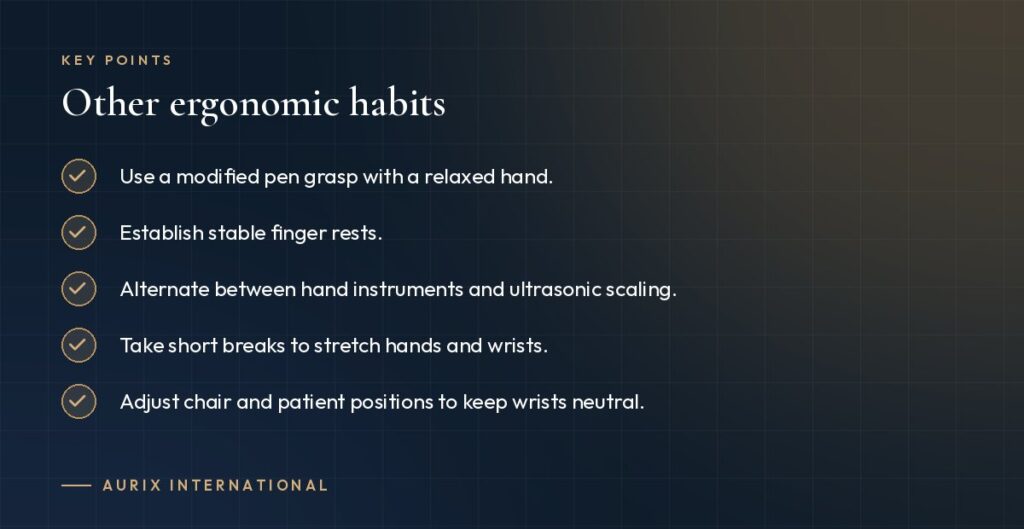
- Use a modified pen grasp with a relaxed hand.
- Establish stable finger rests.
- Alternate between hand instruments and ultrasonic scaling.
- Take short breaks to stretch hands and wrists.
- Adjust chair and patient positions to keep wrists neutral.
Evaluating instruments
Before switching to new instruments, try them for a full session. Comfort over a whole day matters more than first impressions.
Ask Aurix about handle options when building your custom kit. See also: hollow, solid or resin handles.