Retained roots and difficult luxations are part of everyday practice. Having every elevator you might need already in one sterile cassette saves time and avoids opening extra pouches mid-procedure. That is the idea behind the Aurix Root Elevation Instrument Kit.
What the kit is for
The kit is a 12-piece oral surgery system designed for root elevation, retained root retrieval, luxation, flap reflection and atraumatic extraction procedures.
What is inside
The kit brings together classic elevator patterns with soft-tissue instruments, including:
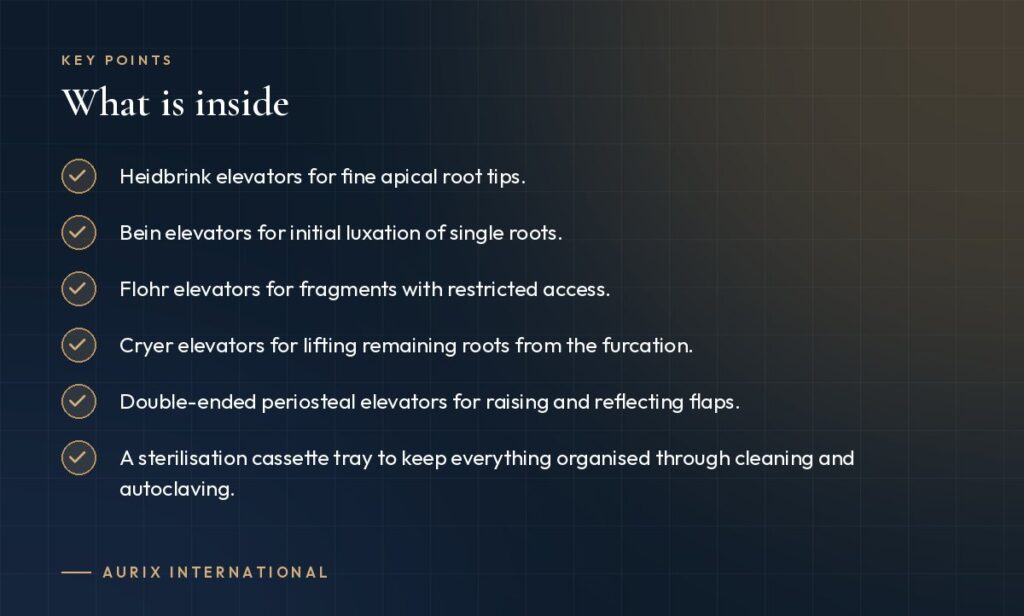
- Heidbrink elevators for fine apical root tips.
- Bein elevators for initial luxation of single roots.
- Flohr elevators for fragments with restricted access.
- Cryer elevators for lifting remaining roots from the furcation.
- Double-ended periosteal elevators for raising and reflecting flaps.
- A sterilisation cassette tray to keep everything organised through cleaning and autoclaving.
For the exact list of instruments and specifications, see the product page.
A typical workflow with the kit
- Reflect a flap where needed with the periosteal elevator.
- Begin luxation with a Bein elevator.
- If a root fractures, use the Cryer pair to engage and lift the remaining root.
- Retrieve small apical tips with a Heidbrink or Flohr pattern.
Who it suits
- General practices that perform routine and moderately difficult extractions.
- Oral surgery clinics that want a dedicated root-retrieval cassette.
- Dental schools and training programmes that teach elevator technique.
Why a cassette matters
Keeping instruments in a cassette reduces handling, protects fine tips from damage and speeds up reprocessing. Instruments can be cleaned, dried and sterilised without being sorted by hand, which also reduces the risk of sharps injuries.
Care
Clean instruments in the cassette straight after use, run the cassette through the ultrasonic cleaner and autoclave in a wrap or pouch. Inspect elevator tips monthly under magnification.
Want different patterns or extra instruments? Every Aurix kit can be adapted through our custom kit service.