An instrument catalogue can look like a foreign language: Gracey 11/12, Molt 9, 204S, Fig. 150. However, once you understand how instruments are named and numbered, ordering becomes accurate and fast.
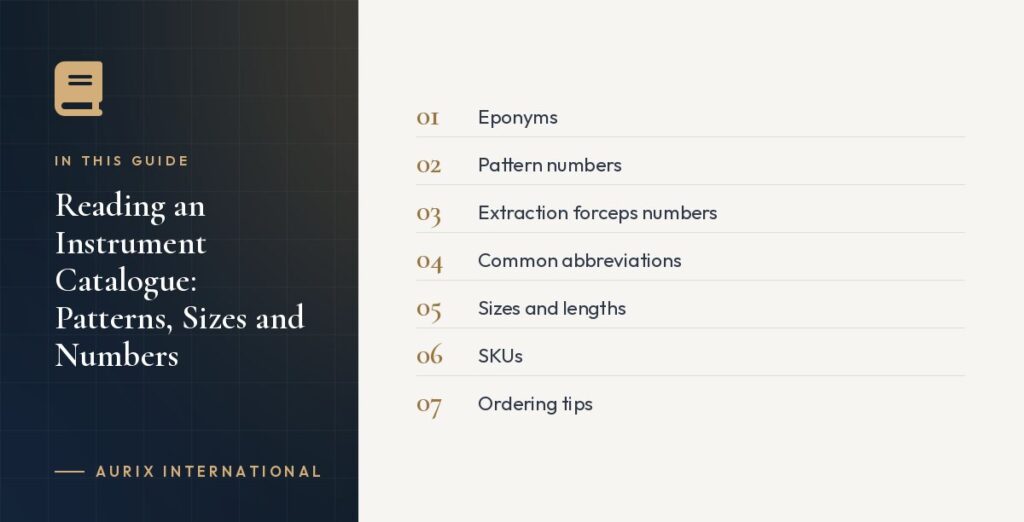
Eponyms
Many instruments are named after the clinician who designed them: Gracey, Molt, Cryer, Heidbrink, Minnesota (a place), Castroviejo. The name tells you the general design.
Pattern numbers
Numbers distinguish versions of the same design. For example, Gracey 11/12 and 13/14 are different curettes for mesial and distal surfaces. Double-ended instruments often have two numbers separated by a slash, one for each end.
Extraction forceps numbers
Forceps are numbered by pattern, but numbering systems differ between manufacturers and regions. Always check the beak shape and description, not just the number.
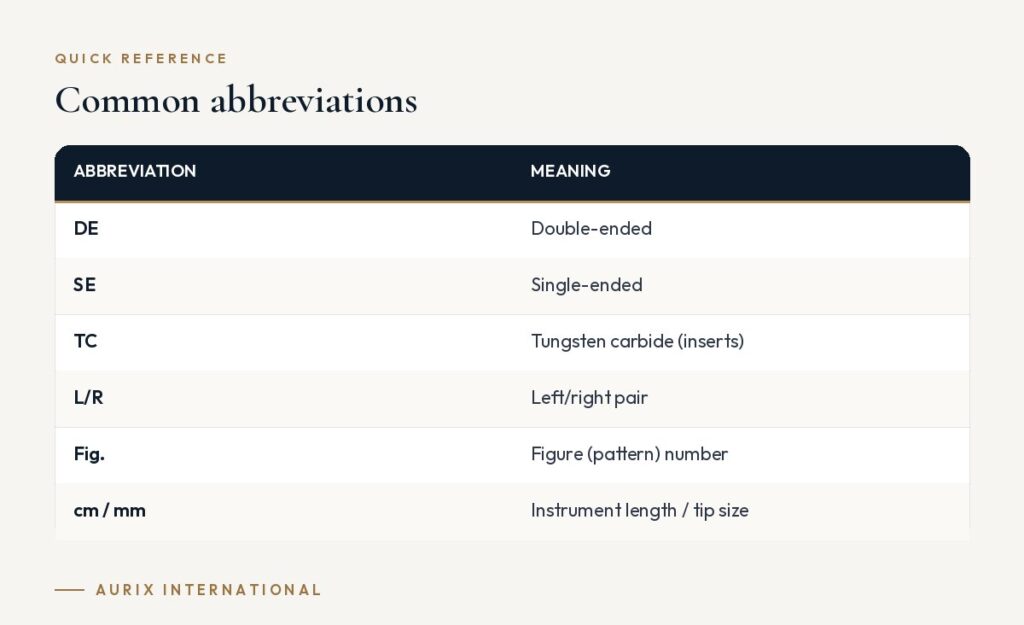
Common abbreviations
| Abbreviation | Meaning |
|---|---|
| DE | Double-ended |
| SE | Single-ended |
| TC | Tungsten carbide (inserts) |
| L/R | Left/right pair |
| Fig. | Figure (pattern) number |
| cm / mm | Instrument length / tip size |
Sizes and lengths
Lengths are usually given in centimetres or inches. Tip widths and diameters are given in millimetres.
SKUs
Each supplier uses its own SKU (stock-keeping unit) codes. When reordering, quoting the SKU avoids confusion. For example, Aurix kit SKUs begin with “AX”.
Ordering tips
- Note the pattern name and number.
- Check the description and image.
- Record the SKU for reorders.
- Ask the supplier if unsure.
Need help matching patterns? Contact Aurix.
Using an instrument catalogue with confidence
When you compare two catalogues, match the pattern number first and the brand name second. Many manufacturers make the same Gracey, Molt or Cryer patterns, so the number usually tells you more than the product title. In addition, check the handle diameter, the material and the length, because these details change how an instrument feels in the hand.
Next, keep a short internal list of the patterns your clinic already uses. This list makes it easy to reorder the same items, and it also helps new staff read an instrument catalogue without guessing. Similarly, note any left/right pairs or double-ended versions, since these often share a base number with a small suffix.
Finally, ask your supplier to confirm anything unclear before you order. A quick check on a figure number or abbreviation can prevent returns and delays. For example, Aurix can match patterns from another instrument catalogue to equivalent items in our range.