Dental hand instruments have a long history, but their design continues to evolve. Here are some of the trends shaping instruments today.
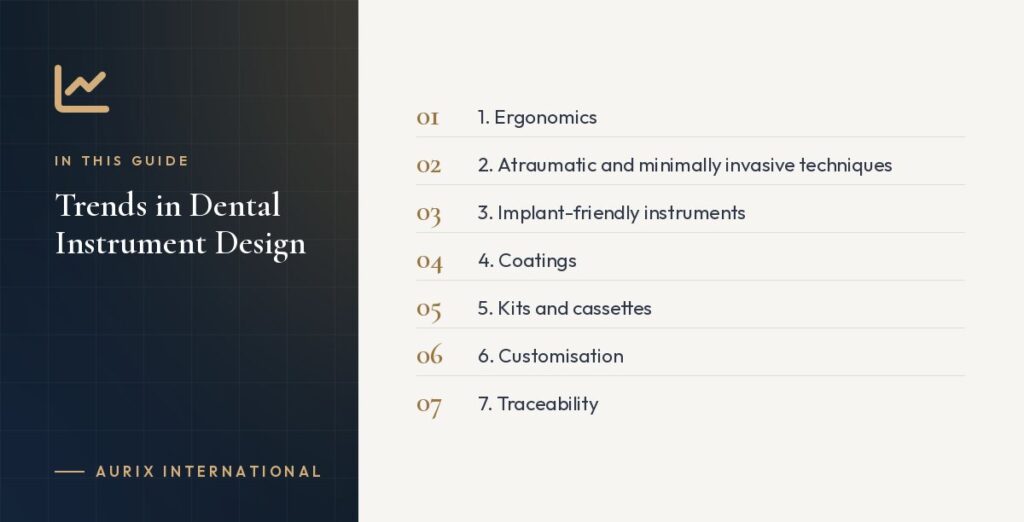
1. Ergonomics
Wider, lighter, textured handles are increasingly common as awareness of clinician musculoskeletal health grows.
2. Atraumatic and minimally invasive techniques
Demand for luxators, periotomes and fine elevators reflects a focus on preserving bone for implant placement.
3. Implant-friendly instruments
Titanium and coated instruments that do not scratch implant surfaces are increasingly used in implant and peri-implant care.
4. Coatings
Non-stick coatings on composite instruments and tungsten carbide inserts on cutting and gripping instruments improve performance and longevity.
5. Kits and cassettes
Clinics increasingly buy procedure-based kits in cassettes rather than individual instruments, saving time and improving infection control.
6. Customisation
Online kit builders let clinicians design trays to match their workflow and receive quotes quickly.
7. Traceability
Laser-marked codes and tracking systems record each instrument’s sterilisation history.
8. Sustainability
Interest in durable, reusable instruments and reduced packaging continues to grow.
What it means for clinics
Many of these trends reduce time, improve outcomes and protect clinicians. Reviewing instruments every few years ensures your trays keep pace.
Explore Aurix kits and the kit builder.