When comparing instrument prices, it is tempting to choose the lowest. But the purchase price is only part of the cost. Total cost of ownership (TCO) includes everything you spend on an instrument over its life.
Components of TCO
- Purchase price.
- Reprocessing — cleaning, sterilisation, packaging and staff time.
- Maintenance — sharpening, lubrication and repair.
- Replacement frequency — how often the instrument must be replaced.
- Downtime — delays when an instrument fails or is missing.
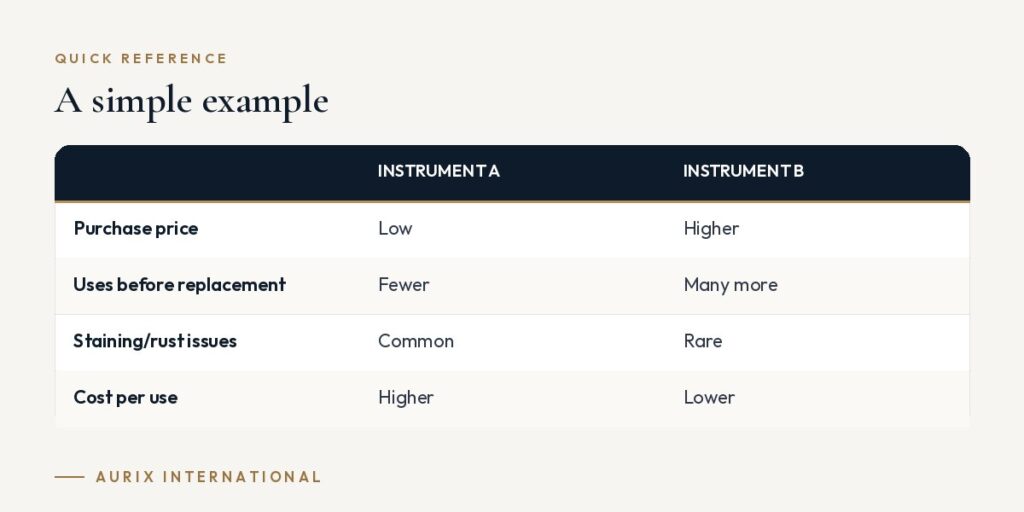
A simple example
| Instrument A | Instrument B | |
|---|---|---|
| Purchase price | Low | Higher |
| Uses before replacement | Fewer | Many more |
| Staining/rust issues | Common | Rare |
| Cost per use | Higher | Lower |
An instrument that costs more but lasts several times longer usually has a lower cost per use.
Calculating cost per use
Cost per use = (purchase price + maintenance costs) ÷ number of uses, plus reprocessing cost per cycle.
Hidden costs of poor instruments
- Longer procedures due to poor performance.
- Clinician fatigue from dull or heavy instruments.
- Patient discomfort.
- Time spent reordering.
Reducing TCO
- Buy quality instruments.
- Follow good cleaning and maintenance practices.
- Standardise kits to reduce variety and waste.
- Buy in bulk for better pricing.
Aurix offers wholesale pricing and kits that help reduce total cost. Request a quote.