Before bone can be seen, the soft tissue covering it must be lifted. The periosteal elevator separates the mucoperiosteum from the bone so that a full-thickness flap can be reflected without tearing. A good periosteal elevator makes this quick and atraumatic; a poor one shreds tissue and slows healing.
What a periosteal elevator does
The thin, sharp working end is slid under the periosteum and pushed along the bone surface, peeling the flap away in one layer. The instrument is then often used as a retractor to hold the flap back.
Common patterns
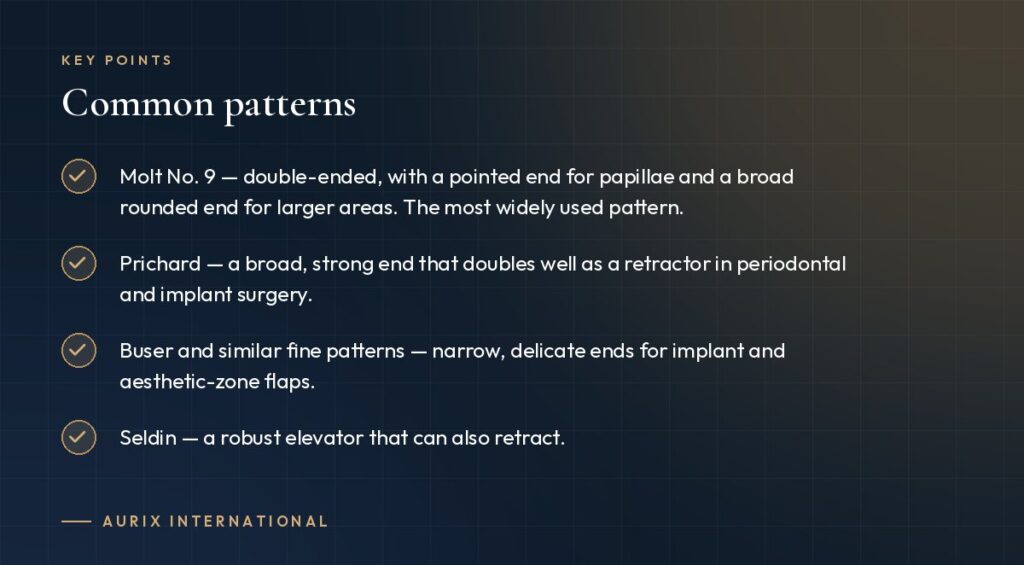
- Molt No. 9 — double-ended, with a pointed end for papillae and a broad rounded end for larger areas. The most widely used pattern.
- Prichard — a broad, strong end that doubles well as a retractor in periodontal and implant surgery.
- Buser and similar fine patterns — narrow, delicate ends for implant and aesthetic-zone flaps.
- Seldin — a robust elevator that can also retract.
What to look for
Edge and thickness
The working end should be thin and sharp enough to get under the periosteum without crushing it, yet strong enough not to bend. Inspect edges regularly and resharpen as needed.
Tip materials
Some periosteal elevators have titanium or coated tips. These are useful around titanium implants because they reduce the risk of scratching the implant surface.
Handle
A wider, textured handle gives better control when pushing along bone. Hollow handles are lighter and reduce fatigue in long procedures.
Technique tips
- Start at a papilla or the corner of a releasing incision.
- Keep the instrument in contact with bone at all times.
- Use short, controlled pushing strokes rather than levering.
- Once raised, use the broad end to retract and protect the flap.
Building a set
Most clinics need at least two periosteal elevators per surgical cassette: a Molt-style double-ended instrument and a broader retracting pattern. The Aurix Root Elevation Instrument Kit includes double-ended periosteal elevators with titanium tips. See the kit.