Steam sterilisation in an autoclave is the standard method for reprocessing dental instruments. Understanding how autoclave cycles work helps you choose the right cycle, load the chamber correctly and avoid wet or unsterile packs.
How steam sterilisation works
Pressurised steam at high temperature transfers heat rapidly to instruments and kills micro-organisms, including spores. For steam to work, it must contact every surface, which is why air removal and correct loading are so important.
Types of autoclave
Gravity displacement (Type N)
Steam enters the chamber and pushes air out through a drain. Suitable for unwrapped solid instruments, but not reliable for wrapped, hollow or porous loads.
Pre-vacuum (Type B)
A vacuum pump removes air before steam enters, often in several pulses. This allows steam to penetrate wrapped packs, cassettes and hollow instruments such as handpieces. Type B autoclaves are recommended for most dental loads.
Type S
Validated by the manufacturer for specific load types; check the instructions for what each cycle is approved for.
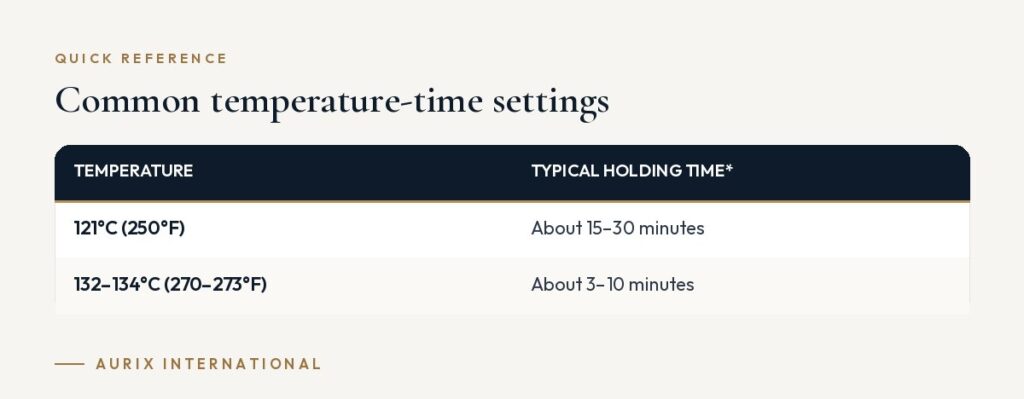
Common temperature-time settings
| Temperature | Typical holding time* |
|---|---|
| 121°C (250°F) | About 15–30 minutes |
| 132–134°C (270–273°F) | About 3–10 minutes |
*Holding times vary by autoclave type, load and local guidance. Always follow your autoclave manufacturer’s instructions and local regulations.
Drying
The drying phase is part of the cycle. Removing packs before they are dry can wick contaminants through wet wraps and cause corrosion.
Loading tips
- Do not overload; leave space for steam to circulate.
- Place pouches on their edge, paper to plastic.
- Keep cassettes flat or as directed by the manufacturer.
- Open hinged instruments.
Monitoring
- Physical: check the printout or display for time, temperature and pressure.
- Chemical: use indicators inside and outside each pack.
- Biological: spore tests at the frequency required by your local regulations.
Aurix instruments are made from surgical-grade stainless steel for repeated steam sterilisation. Always follow local infection-control guidance.