Tissue forceps, sometimes called pickups, hold soft tissue steady while it is cut, sutured or repositioned. Choosing the wrong type can crush delicate gingiva or let a needle slip. Here are the patterns most used in dental surgery.
Toothed vs non-toothed tips
- Toothed forceps have small interlocking teeth at the tip (for example 1×2 teeth). Also, they grip tissue securely with less pressure, which reduces crushing.
- Non-toothed (atraumatic) forceps have fine serrations. In addition, they help with very delicate tissue and for handling needles and sutures.
Common patterns
Adson tissue forceps
Adson forceps have broad, flat handles that narrow to fine tips. Additionally, they give good control with light pressure and are widely used for suturing flaps.
Gerald forceps
Gerald forceps are slimmer and more delicate, ideal for fine flaps, periodontal surgery and microsurgery.
College (cotton) pliers
College pliers are the angled tweezers found on most dental trays. They are not tissue forceps, but they place and retrieve cotton rolls, small items and materials.
Allis forceps
Allis forceps have ratchets and multiple teeth to hold tissue that will be removed, such as a biopsy specimen.
How to choose
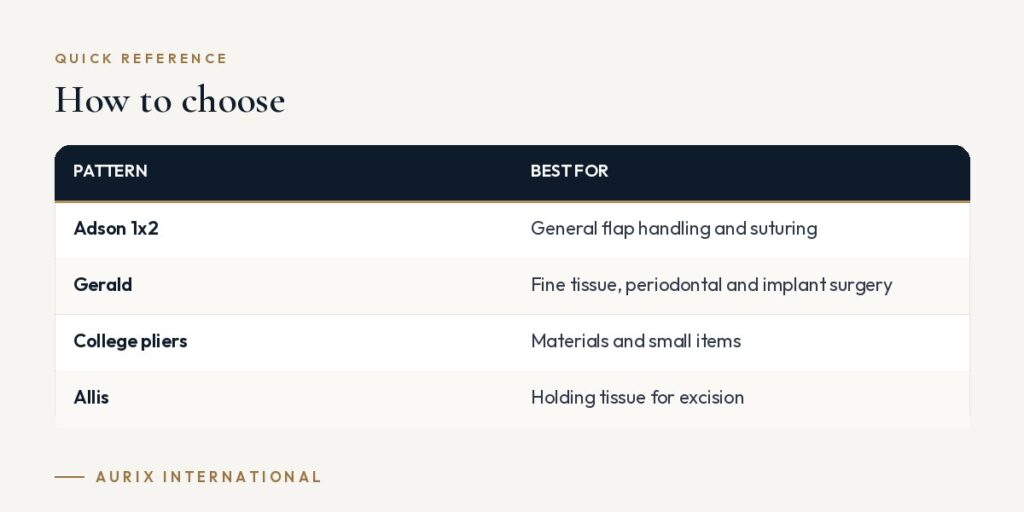
| Pattern | Best for |
|---|---|
| Adson 1×2 | General flap handling and suturing |
| Gerald | Fine tissue, periodontal and implant surgery |
| College pliers | Materials and small items |
| Allis | Used when holding tissue for excision |
Using tissue forceps gently
Generally, hold forceps like a pen, grip the minimum amount of tissue and avoid squeezing the flap edge repeatedly. Grasp the underside of the flap where possible so that visible margins are not damaged.
Care
In general, check that tips meet perfectly and that teeth interlock. Misaligned tips slip and tear tissue. Fine tips bend easily, so store them in a cassette rather than loose in a drawer.
Tissue forceps are part of the Aurix suturing and surgical kits. Build a custom kit with your preferred patterns.